China Top Bakery Automation Equipment Manufacturers?

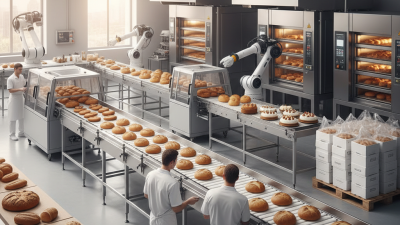
China’s bakery sector is moving from manual production toward measurable bakery automation. Industry estimates place China’s bakery market above RMB 300 billion, although reported figures vary by product scope and research method. Fortune Business Insights valued the global bakery products market at about USD 549 billion in 2023. Its forecast also shows continued equipment demand as producers seek higher output, consistency, and labor efficiency.

This guide examines China’s leading bakery automation equipment manufacturers through practical and technical criteria. These include dough handling accuracy, oven temperature control, sanitation design, spare-parts access, and after-sales support. Manufacturers such as Sinmag, Hongling, Shanghai Yucheng, and other specialized suppliers serve different production scales. Some focus on small bakeries. Others build complete lines for bread, pastry, cakes, and frozen dough.

A machine can look impressive under showroom lights. Factory performance matters more. Reliable evaluation should include production trials, energy data, maintenance records, and references from similar bakeries. Reports from Mordor Intelligence and Grand View Research regularly identify automation, process standardization, and labor shortages as major food-processing trends. However, market reports cannot replace a site inspection. Their market boundaries differ, and some figures remain difficult to compare.

This overview is not a permanent ranking. Technology changes quickly. A supplier with strong equipment may still lack local service capacity. Buyers should check certifications, installation experience, control-system compatibility, and total ownership costs. The best choice is not always the cheapest machine. It is the system that keeps a baker’s hands cleaner, production steadier, and downtime shorter.
China Top Bakery Automation Equipment Manufacturers?

China’s Bakery Automation Equipment Manufacturing Landscape

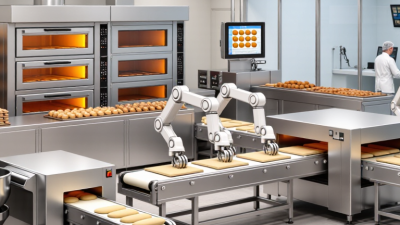
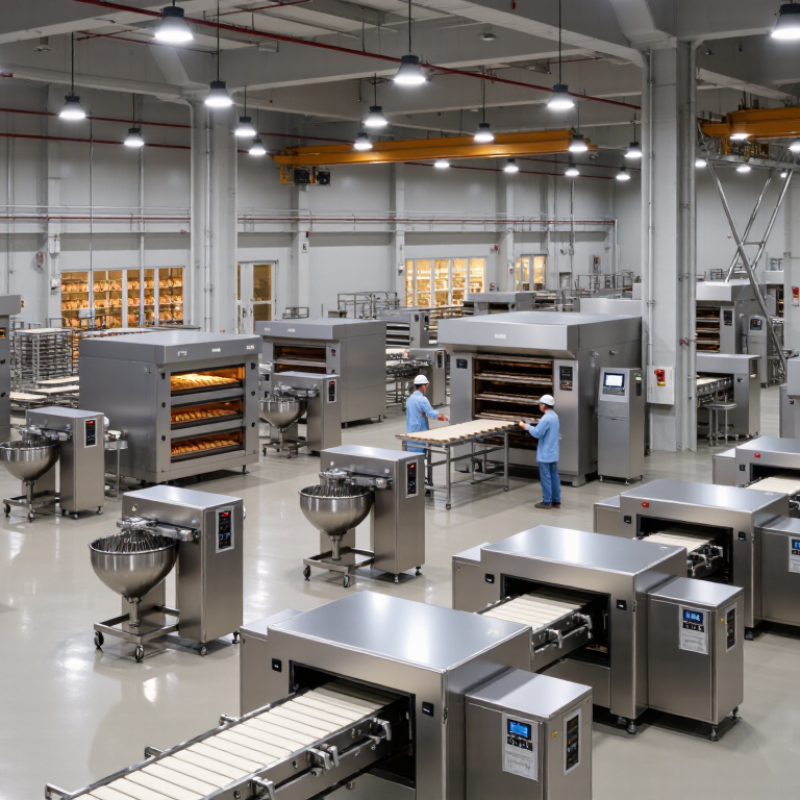
China’s bakery automation equipment manufacturing landscape has expanded from standalone machines to integrated production systems. Manufacturers now produce mixers, dough dividers, moulders, proofers, ovens, cooling conveyors, and packaging units. Many factories support both medium-sized bakeries and high-volume industrial plants.

In practical installations, stainless steel frames, servo-driven dosing, and programmable controls improve consistency. Temperature sensors help maintain stable baking conditions across long production cycles. Vision inspection can identify irregular shapes, while automatic cleaning access reduces downtime. However, performance depends heavily on recipe design, flour quality, and operator training. A technically advanced line can still produce uneven bread.

Reliable suppliers usually provide factory acceptance testing, installation guidance, spare parts, and maintenance training. They should explain output capacity using real product samples, not only catalogue figures. Documentation matters, especially for electrical systems, food-contact surfaces, safety protection, and traceability. Local engineering teams can also shorten response times when a conveyor, sensor, or control module fails.

The market is competitive, but quality varies. Some equipment looks polished while lacking careful integration between production stages. Buyers should test changeover speed, cleaning procedures, noise levels, and energy consumption before purchasing. Full automation is not always the best choice. Smaller bakeries may gain more from modular equipment than from an oversized line that is difficult to adjust. Chinese manufacturers continue improving, although after-sales consistency remains an area requiring honest evaluation.

Key Types of Bakery Automation Equipment Made in China

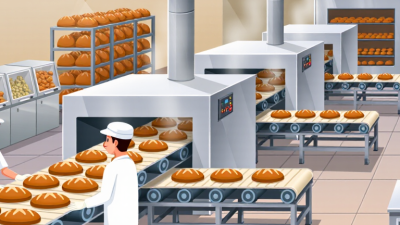
China’s bakery automation sector covers more than ovens. Key equipment includes dough mixers, dividers, rounders, proofers, tunnel ovens, cooling conveyors, slicers, and packing lines. Each machine solves a specific production problem. A divider controls portion weight. A proofer manages temperature and humidity. A cooling conveyor protects texture before slicing and wrapping.

Allied Market Research estimated the global bakery processing equipment market at about US$13.2 billion in 2021, with continued growth expected through 2031. This demand supports China-made systems for bread, pastry, biscuits, and steamed bakery products. Many Chinese factories now combine servo drives, touchscreen controls, stainless-steel frames, and vision inspection. Practical details matter. A small bakery may need a compact spiral mixer, while an industrial plant may require continuous mixing and automatic tray loading. Bigger is not always better.

Food processing reports from PMMI repeatedly identify labor shortages, flexible production, and safer automation as major investment drivers. Chinese equipment suppliers respond with modular lines and adjustable changeover settings. Yet performance claims require careful checking. Test the machine with your actual flour, dough hydration, tray size, and target speed. Some specifications look impressive on paper. They may weaken during humid seasons or frequent product changes. Ask for energy readings, sanitation procedures, spare-parts availability, and documented acceptance tests. That evidence is more useful than polished brochures.

Leading Chinese Bakery Automation Equipment Manufacturers

China Top Bakery Automation Equipment Manufacturers?

Leading Chinese Bakery Automation Equipment Manufacturers

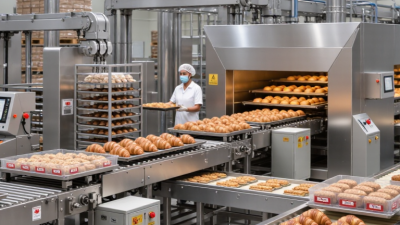
China’s bakery automation sector has moved beyond basic mixers and ovens. Leading manufacturers now engineer complete lines for bread, biscuits, pastries, and filled products. Their systems may include dough dividers, spiral mixers, proofers, tunnel ovens, cooling conveyors, and robotic packing units. According to a 2024 Grand View Research report, the global bakery processing equipment market was valued at roughly USD 15 billion in 2023. It is expected to grow steadily through 2030, driven by labor shortages and demand for consistent production.

Practical buyers should examine more than equipment speed. A reliable Chinese manufacturer should provide factory testing, electrical documentation, spare-parts planning, and operator training. Servo-driven depositors can improve portion accuracy, while automated proofing controls help stabilize humidity and temperature. Small details matter. A poorly designed conveyor transfer can damage soft buns every hour. Industry reports from Mordor Intelligence also identify automation, energy efficiency, and flexible production as major market trends. However, published estimates differ because research firms define “bakery equipment” differently.

Experience still exposes weaknesses. Some suppliers present impressive output figures without explaining product size, recipe limits, or changeover time. That deserves careful questioning. Ask for test-bake records using your flour and filling. Request energy data under normal loading, not ideal conditions. Chinese manufacturers can offer strong customization and competitive engineering, but quality control is not identical across factories. Audited production records, food-contact material certificates, and documented acceptance tests provide more dependable evidence than attractive brochures.

How to Evaluate a Chinese Bakery Equipment Supplier

China Top Bakery Automation Equipment Manufacturers?

How to Evaluate a Chinese Bakery Equipment Supplier

A reliable supplier should explain the process, not only display attractive machines. Ask for the equipment layout, product capacity, power requirements, and expected waste rate. Request a live production test using your flour, dough hydration, and target product size. A showroom test may look perfect. Real dough behaves differently.

Check the factory beyond its website. Review food-contact material documents, electrical safety records, quality-control procedures, and export experience for your destination. Confirm whether critical parts are sourced consistently. Walk through the assembly area if possible. Clean floors help, but traceable inspections matter more. Ask for reference projects with similar output, not just famous customer names.

Service can decide the equipment’s real value. Require a written warranty, installation scope, training plan, spare-parts list, and response time. Clarify who pays for travel, replacement components, and remote troubleshooting. A capable supplier should provide manuals with wiring diagrams and maintenance intervals. Communication gaps are common, even with technically strong teams. Use drawings, photographs, and signed specifications to reduce misunderstandings. Do not rely on promises made during a fast video call.

Price deserves careful questioning. A cheaper quotation may exclude conveyors, molds, sensors, or commissioning. Compare the full operating cost over several years. One detail is easy to miss: cleaning access around belts and hoppers. If operators cannot reach those areas, downtime and hygiene risks may increase. Your evaluation may still contain assumptions, so record them and test the weakest points before placing the order.

How to Evaluate a Chinese Bakery Equipment Supplier

This supplier evaluation framework uses a 10-point scoring scale across practical purchasing criteria. Safety compliance, hygienic construction, production capacity, energy efficiency, after-sales support, customization, and total cost of ownership should all be reviewed before selecting a Chinese bakery automation equipment manufacturer.

Industry Trends Shaping China’s Bakery Automation Market

China Top Bakery Automation Equipment Manufacturers?
Industry Trends Shaping China’s Bakery Automation Market

China’s bakery sector is moving from labor-heavy production toward connected, flexible automation. The China Bakery Foods Association reported that China’s bakery food market exceeded RMB 300 billion in recent years. This scale increases demand for mixers, depositors, tunnel ovens, cooling systems, and automated packaging lines. Production floors now favor stainless-steel conveyors, digital temperature displays, and recipe-controlled dosing.

Labor shortages are accelerating this change. Industry research from Mordor Intelligence identifies automation, energy efficiency, and smart monitoring as major bakery equipment trends in Asia-Pacific. Chinese factories increasingly use sensors to track dough temperature, oven humidity, and production speed. These controls help reduce batch variation and material waste. Still, automation is not a magic solution. Poorly calibrated sensors can create expensive inconsistencies.

Flexibility matters more than raw speed. Grand View Research reports continued growth in the global bakery processing equipment market, supported by frozen dough, packaged bread, and convenience products. Chinese producers are responding with modular lines that switch between buns, pastries, and filled products. Smaller bakeries may choose semi-automatic systems first. A fully automated line can be impressive, but it may not suit changing local demand. Maintenance training remains an overlooked issue. Sometimes, a simpler machine performs better.