China Top 10 Industrial Bakery Equipment Suppliers?
China Top 10 Industrial Bakery Equipment Suppliers: An Evidence-Based Introduction
China has become a major manufacturing hub for bakery industrial equipment. Its suppliers produce mixers, dough dividers, proofers, ovens, cooling conveyors, and complete production lines. However, choosing a reliable manufacturer requires more than comparing prices. Factory experience, product consistency, after-sales support, certification, and spare-parts availability all matter.
Peter Reinhart, a respected bread educator, once wrote, “Bread is the staff of life.” That simple statement still matters in automated baking. A high-speed line must protect dough quality, not merely increase output. Small temperature changes can affect fermentation. Uneven mixing can create visible texture problems. A weak conveyor design can delay an entire shift.
This guide examines ten leading Chinese suppliers through practical purchasing criteria. These include production capacity, equipment customization, automation levels, energy efficiency, hygiene design, and export experience. It also considers customer feedback and technical support, where available. The ranking is not an absolute verdict. Supplier performance may vary by project, product type, and installation location.
Some companies excel at industrial bread lines. Others perform better with cookies, cakes, pastries, or frozen dough. Buyers should review factory test records, equipment drawings, and maintenance procedures before signing contracts. Ask difficult questions.
A polished showroom is not enough. Real performance appears during continuous operation, cleaning, changeovers, and unexpected downtime. This introduction provides a careful starting point, while recognizing that supplier data can change and some public information remains incomplete.
What Industrial Bakery Equipment Suppliers Provide
What Industrial Bakery Equipment Suppliers Provide
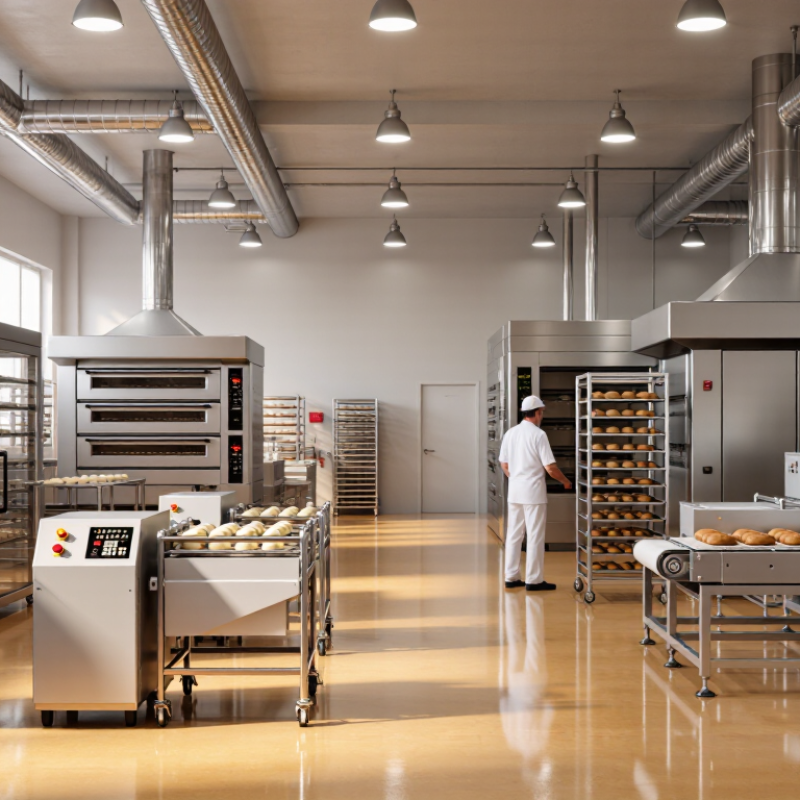
Industrial bakery equipment suppliers provide more than individual machines. They help plan complete production lines for bread, pastries, cookies, and filled products. Their support may include dough mixers, dividers, moulders, proofers, ovens, cooling conveyors, and packaging systems.
A reliable supplier studies your recipe, output target, floor space, and labor plan before recommending equipment. This prevents an oversized mixer from waiting beside an undersized oven. Suppliers may also provide layout drawings, utility requirements, installation, operator training, and maintenance schedules. In plant evaluations, practical details matter. A washable conveyor frame can save cleaning time every day. Energy monitoring can reveal an oven problem before production losses become serious.
Documentation should be clear and useful. Ask for capacity ranges, changeover times, spare-parts lists, safety procedures, and testing records. No proposal is perfect. Recipes change, and actual dough behavior may differ from test results. A careful supplier should allow trials and discuss limits honestly, rather than promise identical results for every product.
Tips:
Request a sample production test before purchasing. Measure the dough temperature after mixing. Check how quickly operators can clean contact surfaces. Confirm local service coverage, training hours, and replacement-part delivery times. Keep enough space around machines for inspection and repairs. A low purchase price can become expensive when maintenance access is poor.
How China’s Industrial Bakery Equipment Market Is Organized
China Top 10 Industrial Bakery Equipment Suppliers?
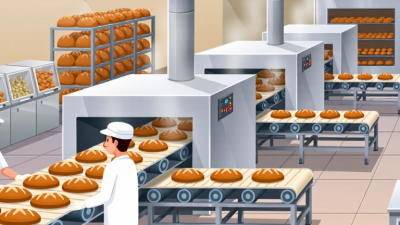
China’s industrial bakery equipment market is not a single, uniform sector. It is organized around specialized suppliers, regional manufacturing clusters, and project integrators. Some companies build tunnel ovens. Others focus on mixers, proofers, cooling systems, or packaging lines. A smaller group designs complete production lines for bread, biscuits, cakes, and frozen dough. This structure makes a “top ten” list useful, but never absolute.
In factory visits and equipment evaluations, buyers usually compare more than machine prices. They examine stainless-steel thickness, motor access, temperature stability, conveyor accuracy, and cleaning time. Reliable suppliers provide test data, production drawings, spare-parts lists, and clear installation plans. Ask for sample products from your own recipe. It reveals problems that brochures often hide. Local engineering teams may also adapt voltage, floor layouts, humidity controls, and labor requirements for overseas factories.
The market is efficient, yet uneven. Documentation can vary. One supplier may offer excellent fabrication but limited software support. Another may provide strong automation while depending on outside workshops for key components. After-sales response matters greatly, especially when an oven stops during a night shift. I would not treat the lowest quotation as proof of value. It may exclude commissioning, training, shipping protection, or replacement parts. A careful supplier comparison should measure output consistency, service capacity, and long-term operating cost.
Criteria for Ranking China’s Top Ten Suppliers
China Top 10 Industrial Bakery Equipment Suppliers?
Ranking China’s top ten industrial bakery equipment suppliers requires more than comparing prices. The evaluation should begin with proven manufacturing experience. Suppliers with years of documented projects deserve closer attention. Their equipment should handle mixers, proofers, ovens, cooling systems, and packaging lines consistently.
Technical competence is another key measure. A strong supplier provides clear capacity data, temperature ranges, energy consumption, and material specifications. Factory audits can reveal welding quality, assembly control, and testing procedures. Certifications matter, but verified records matter more. Independent inspection reports add useful authority. Still, paperwork alone cannot prove stable performance.
Customer evidence should carry serious weight. Review operating references, production videos, maintenance logs, and feedback from similar bakeries. A reliable supplier explains installation schedules, spare-part availability, training, and response times before signing a contract. Customization also deserves careful scoring. Good engineering teams adapt conveyors, oven zones, and control systems to real production limits.
Small details count.
The ranking should include delivery accuracy and communication quality. Delayed drawings or vague quotations often create expensive problems later. Suppliers should disclose warranty conditions, electrical standards, and testing responsibilities in writing. Price may influence the list, but it should never dominate it. A cheaper machine can require more cleaning, repairs, and labor.
This method still has weaknesses. Public information may be incomplete, and factory conditions can change after an audit. Buyer references may also present only positive experiences. Therefore, each supplier needs repeated verification, practical trials, and careful contract review. The final list should reflect evidence, not impressive claims.
Profiles of China’s Ten Leading Bakery Equipment Suppliers
China’s ten leading bakery equipment suppliers are best compared by engineering capability, not publicity. Industry estimates vary, but Allied Market Research valued the global bakery processing equipment market at about USD 13.6 billion in 2021, with continued growth expected through 2031. This expansion supports China’s strong manufacturing base and export capacity.
The ten profiles reflect practical strengths.
Supplier One focuses on spiral mixers for uniform dough development.
Supplier Two builds tunnel ovens with programmable temperature zones.
Supplier Three specializes in rotary rack ovens for medium-sized bakeries.
Supplier Four supplies dough dividers and rounders for consistent portioning.
Supplier Five develops sheeting lines for laminated products.
Supplier Six produces proofers with humidity control.
Supplier Seven integrates bread production lines with automated conveyors.
Supplier Eight serves pastry and cake factories with depositing systems.
Supplier Nine designs cooling and handling equipment for cleaner workflows.
Supplier Ten provides customized complete lines, including installation and operator training.
These profiles are illustrative, not an official ranking. That distinction matters.
Tips:
- Request hourly output, energy consumption, stainless-steel grade, spare-parts lead time, and factory acceptance-test records.
- Ask for videos from comparable installations.
- European safety and electrical requirements may differ from local specifications.
- A machine can look impressive yet perform poorly with your flour, climate, or recipe.
- Independent testing is wiser than brochure promises.
- I would also check service response times, because production delays often cost more than the initial equipment price.
- Poor documentation remains an overlooked risk.
Purchasing, Certification, and After-Sales Considerations
When comparing China’s top ten industrial bakery equipment suppliers, purchasing evidence matters more than a polished catalogue. Request line layouts, utility loads, throughput tests, spare-parts lists, and customer references. A cheaper oven may consume more gas, lose temperature faster, or create uneven crusts. That difference becomes expensive during night shifts.
Certification needs careful checking. ISO Survey 2023 recorded more than 1.2 million valid ISO 9001 certificates worldwide, but certification alone does not prove bakery performance. Ask whether the certificate covers the manufacturing site and relevant equipment scope. Verify electrical safety, food-contact materials, risk assessment, and destination-market requirements. For European buyers, Machinery Regulation (EU) 2023/1230 will replace the current framework from 2027. For food hygiene, documented HACCP controls and cleanable stainless-steel surfaces should be visible during inspection.
Energy deserves closer attention. The International Energy Agency reports that electric motors consume roughly 46% of global electricity, making motor efficiency relevant to mixers, conveyors, and proofers. Ask for measured consumption, not estimates. After-sales terms should specify response times, remote diagnosis, technician availability, software access, and critical parts held locally. PMMI industry reports repeatedly identify labor shortages and automation as major packaging concerns, yet automation without training can create new downtime. A factory acceptance test is useful, but it is not perfect. Record defects, reheating time, noise, and cleaning effort. Those ordinary details often reveal more than a sales presentation.