How to Choose the Right Industrial Bakery Equipment?
Choosing industrial bakery equipment is not a simple question of capacity, price, or polished stainless steel. A machine must fit the product, process, people, building, and growth plan. A high-speed divider may look impressive, yet it can damage dough structure or create unnecessary waste when specifications are poorly matched.
Industry data shows why this decision deserves careful attention. Grand View Research estimates that the global bakery products market will continue expanding through 2030, increasing pressure on manufacturers to improve output and consistency. PMMI’s food and beverage packaging research also highlights automation, labor efficiency, sanitation, and flexible production as major investment priorities. These trends matter on the factory floor. A conveyor that saves ten seconds per batch can still create costly delays if cleaning takes hours.
As bakery engineering specialist John Brodie has noted, “The best equipment decision begins with the product, not the machine.” That principle deserves reflection. It is easy to compare motor power, belt width, and hourly capacity. It is harder to measure dough temperature, changeover time, operator access, and maintenance support. Those details often determine real performance.
The right choice begins with evidence. Review production records, test the dough with suppliers, and inspect equipment under realistic conditions. Ask whether the line can handle today’s recipe and tomorrow’s variation. Consider energy use, spare parts, training, hygiene design, and total ownership cost. Some assumptions may be wrong. That is useful to discover before installation.
This guide explains how to evaluate industrial bakery equipment with practical criteria, credible data, and a clear view of operational risk.
Defining Production Needs and Bakery Equipment Requirements
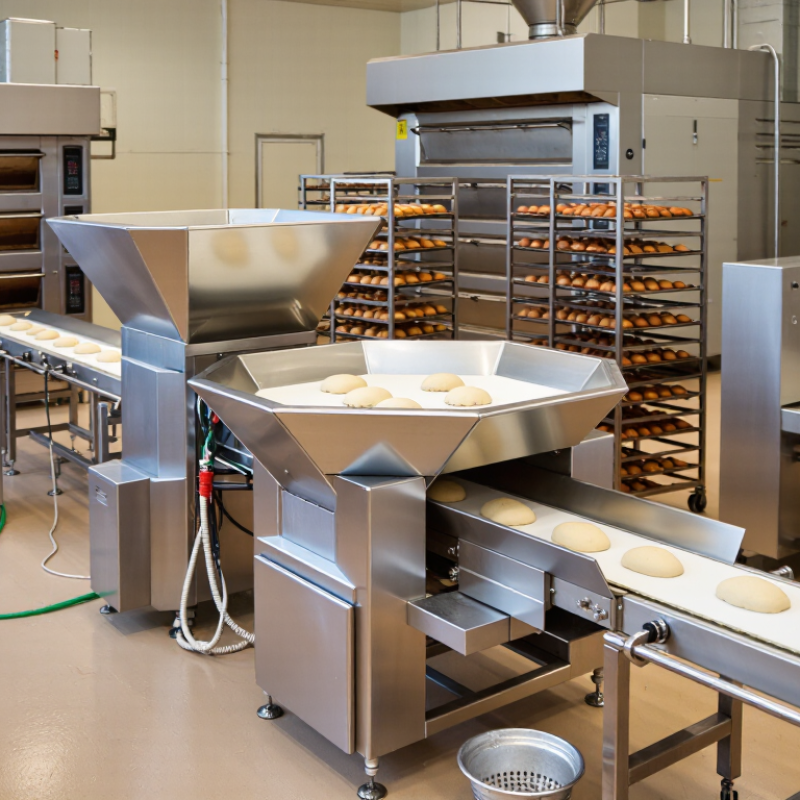
Choosing industrial bakery equipment starts with a measured production brief. Define the products, daily output, batch size, and operating hours. A small bread line may need 500 loaves per hour, while a pastry room needs flexible depositing and filling. Record dough weight, hydration, proofing time, and baking temperature. These details determine mixer capacity, divider accuracy, oven loading, and cooling space. Do not estimate demand from a single busy day. Review at least three months of orders. Waste matters too.
Walk through the full process with operators. Watch how dough moves from weighing to packaging. Note bottlenecks, awkward lifting, cleaning delays, and temperature changes. I have seen an oven sized correctly, yet production stalled because the proofer held too few trays. Equipment requirements should include footprint, power, water, ventilation, noise, and maintenance access. Leave working space around service panels. A machine that fits on paper may block a door in practice.
Set measurable acceptance criteria before requesting quotations. Specify output per hour, product weight tolerance, changeover time, sanitation method, and expected uptime. Ask for test runs using your actual dough, trays, and recipes. This reveals problems that brochures hide. It also helps operators judge controls and ergonomics. Plan for seasonal peaks, but avoid buying capacity that sits idle. I once favored maximum speed over flexibility. The line looked impressive but struggled with smaller batches. That choice needed more reflection. Reliable decisions combine production data, staff experience, supplier documentation, and a realistic maintenance plan.
How to Choose the Right Industrial Bakery Equipment?
Defining production needs starts with matching each process stage to the required hourly output. The chart below uses representative planning benchmarks for 100 g bakery pieces and compares three production scales.
How to use this chart: Select equipment with a nominal capacity above the target line output, while allowing for changeovers, cleaning, product variation, and normal downtime. The lowest-capacity stage can become the production bottleneck, so mixer, divider, proofer, oven, cooling, and packaging capacities should be balanced.
Evaluating Capacity, Automation, Energy Use, and Space
How to Choose the Right Industrial Bakery Equipment?
Capacity should begin with demand, not catalog speed. Calculate hourly output from realistic orders, product changeovers, and cleaning time. A line rated at 6,000 pieces per hour may produce far less during frequent recipe changes. PMMI’s 2023 food and beverage automation report identifies labor availability and production flexibility as major investment drivers. That matches my experience: an oversized line can create idle equipment, higher maintenance, and unnecessary waste. Leave room for growth, but do not purchase tomorrow’s volume today.
Automation must fit the process. Dough dividing, proofing, baking, cooling, and packing need different control levels. Sensors can reduce weight variation and detect temperature drift early. However, complicated controls may slow repairs when operators lack training. A partly automated line is sometimes safer. Test it with your actual dough, trays, and cleaning routine.
Energy and space deserve equal attention. The International Energy Agency reports that electric motor systems have historically used about 53% of global electricity. Fans, conveyors, and compressors therefore need careful sizing. The U.S. Department of Energy notes that compressed air may consume 10% to 30% of an industrial plant’s electricity. Measure leaks before buying larger compressors. Map heat, ventilation, utility access, and operator movement on the floor. A compact oven may save space but increase heat buildup. I have seen that assumption fail. Reserve maintenance clearance, even when the drawing looks efficient.
Checking Safety, Hygiene, Maintenance, and Regulatory Standards
Choosing industrial bakery equipment requires more than comparing output rates. Safety, hygiene, maintenance, and regulatory compliance should guide every purchase decision. The World Health Organization estimates that contaminated food causes 600 million illnesses and 420,000 deaths globally each year. Flour dust also deserves attention. It can irritate airways and create combustible conditions when poorly controlled. Select mixers, sifters, and conveyors with enclosed dust points, emergency stops, guarding, and clear access for cleaning.
Look closely at food-contact surfaces. Stainless steel should be smooth, corrosion-resistant, and free from difficult joints. The U.S. FDA Food Code 2022 emphasizes cleanable surfaces, proper sanitation, and protection from contamination. Equipment should support documented cleaning schedules, allergen changeovers, and temperature checks. A washable design is not automatically hygienic. Inspect drain points, seals, belts, and hidden cavities before approval.
Maintenance affects safety and production reliability. Request preventive-maintenance intervals, spare-part availability, lubrication instructions, and inspection records. ISO 22000-based food safety systems also encourage hazard control and documented corrective actions. A practical test: ask technicians to remove guards and clean the hardest area. If the process feels awkward, operators may skip it. I have seen efficient machines fail because access was inconvenient. That weakness deserves honest review. Check electrical protection, noise exposure, thermal risks, and operator training against local requirements. Compliance should be verified by qualified professionals, not assumed from a supplier’s brochure.
Calculating Total Cost, Supplier Support, and Long-Term Value
Choosing industrial bakery equipment requires more than comparing purchase prices.
Calculate the total cost over five to ten years. Include delivery, installation, staff training, energy use, cleaning, spare parts, and planned maintenance. A low-priced oven may consume more electricity every hour. That difference becomes significant during long production shifts. Also estimate downtime. One missed production day can cost more than an attractive initial discount.
Supplier support strongly affects daily reliability.
Ask how quickly technicians respond and whether remote diagnostics are available. Request clear warranty terms, maintenance schedules, and spare-parts availability. Visit a working bakery if possible. Watch the equipment during startup, product changeovers, and cleaning. These details reveal practical problems that brochures often hide. I have seen buyers focus on output rates, then discover that complicated adjustments slowed their team. That oversight is easy to make.
Tips:
Build a five-year cost spreadsheet before requesting final quotations. Compare energy consumption per production hour, not only motor power. Ask for service-response times in writing. Check whether operators can complete routine cleaning safely and quickly. Leave room for uncertainty. Production volumes may change, and optimistic forecasts can distort the calculation. A slightly flexible machine may deliver better long-term value than a faster model with expensive maintenance. Keep records of repairs, energy bills, and stoppages after installation. Those records support better decisions later.