
Choosing an industrial bakery equipment supplier in 2026 requires more than comparing catalog prices. The right partner should understand production capacity, product consistency, food safety, energy use, and long-term maintenance. A supplier may offer impressive machinery, yet its real value appears during installation, staff training, and unexpected downtime.
Walk through your facility before contacting vendors. Note the flour storage area, mixer clearance, oven ventilation, cooling space, and packaging flow. These details reveal whether a proposed system fits your operation or creates expensive bottlenecks. Ask for documented specifications, factory references, service response times, warranty conditions, and replacement-part availability. Reliable suppliers should explain technical limits clearly, not hide behind polished sales language.
Small details matter.
An experienced supplier can discuss dough temperature, batch variation, conveyor sanitation, and oven recovery after repeated loading. Request evidence from bakeries with similar products and output levels. Speak with their operators, not only their sales team. A strong supplier also evaluates your process instead of forcing a standard package. That may require challenging your assumptions. For example, a larger mixer is not automatically better if your recipes depend on gentle development. Energy savings can also look attractive until maintenance costs are included. I have seen equipment decisions fail because buyers trusted promises more than measured performance. That risk deserves careful reflection.
This guide explains how to assess industrial bakery equipment suppliers with practical, evidence-based criteria. It focuses on capability, credibility, lifecycle cost, and dependable support. Your goal is not to buy the most impressive machine. It is to build a stable bakery system that performs consistently when orders increase.
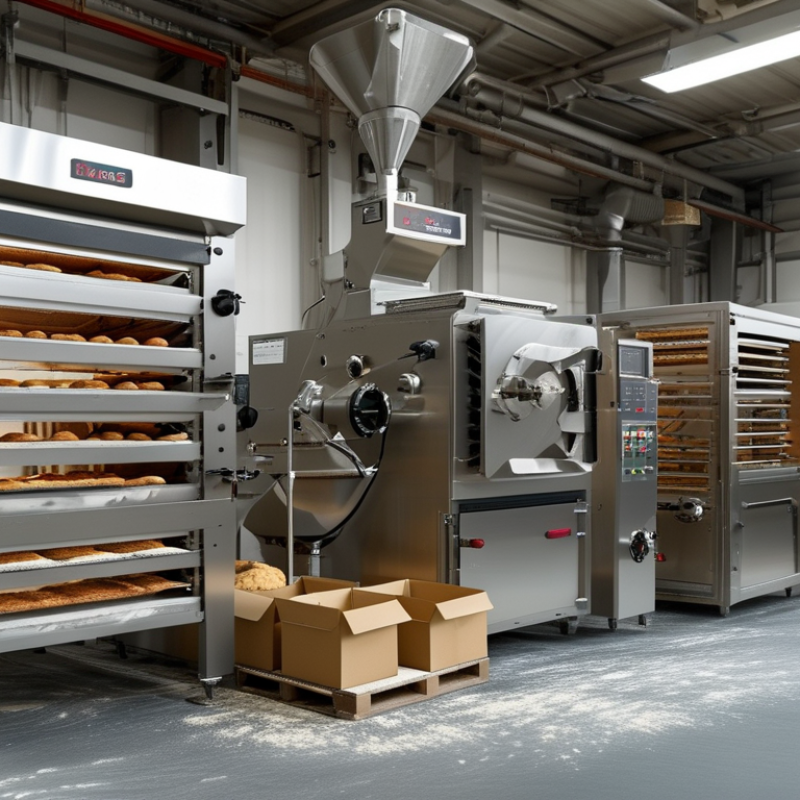
Before contacting an industrial bakery equipment supplier, define the production problem precisely. Record product types, dough hydration, target weights, hourly output, batch size, operating shifts, and available floor space. A 2024 Grand View Research report estimates the global bakery processing equipment market will continue growing through 2030, but market growth does not define your factory’s needs. Your process does.
Measure the line, not just the oven. Note mixing time, proofing temperature, baking temperature, cooling duration, changeover frequency, and cleaning hours. PMMI’s 2024 reports on food processing trends emphasize automation, labor efficiency, and hygienic design as major investment drivers. Ask suppliers for rated output at your actual recipe, not an ideal test dough.
Small details matter. A 30-minute changeover can erase impressive hourly capacity.
Energy and maintenance require hard numbers. Request electricity, gas, compressed-air, water, and spare-parts estimates for one operating year. The International Energy Agency identifies industrial energy efficiency as a continuing competitiveness priority, which makes utility data part of equipment selection. I would not trust a glossy capacity claim alone. Our first specification may also be wrong. Pilot testing should challenge it. Compare product temperature, crumb structure, moisture loss, noise, and operator workload under realistic conditions. Keep those results beside service response times, training plans, warranty limits, and local compliance requirements when evaluating suppliers.
Supplier expertise should be tested on the production floor, not only in a sales meeting. The Business Research Company valued the global bakery processing equipment market at about $13.8 billion in 2023. Its report also projects continued growth through 2024 and beyond. This expansion increases supplier choice, but not necessarily supplier competence. Ask for commissioning records, sanitation procedures, and documented performance from similar dough types. A supplier should understand hydration, proofing temperature, oven recovery, and cleaning access. Practical knowledge matters.
Product range is equally important. A complete supplier may provide mixers, dividers, moulders, proofers, ovens, cooling systems, and packaging interfaces. However, a long catalogue can hide weak integration. Request one process diagram. Check how each machine communicates, transfers product, and handles production changes. PMMI reports that automation investment increasingly focuses on efficiency, flexibility, and labor challenges. Those priorities fit modern bakeries, but equipment must still match real batch sizes and floor space. Bigger is not always better.
Customization should solve measurable problems. Ask for tests using your flour, recipe, tray dimensions, and target output. Require data on throughput, energy use, changeover time, and reject rates. A credible supplier explains tolerances and limitations clearly. It should also provide training, spare-parts planning, and remote diagnostic support. I would remain cautious about perfect projections. Factory conditions are rarely perfect. A small pilot test may reveal more than a polished presentation.
When choosing an industrial bakery equipment supplier, inspect the machine, not only the brochure. Ask for weld photographs, food-contact material certificates, and cleaning instructions. During a factory visit, check flour dust around seals, uneven conveyor belts, and exposed threads. Small defects become expensive hygiene problems.
Compliance must match your market. Verify HACCP support, hygienic design, electrical safety, and ISO 22000-related documentation. The ISO Survey 2023 recorded 1,265,216 ISO 9001 certificates worldwide. A certificate helps, but it does not prove every machine is reliable. Confirm its scope, validity, and audit history. Request traceable records for stainless steel, sensors, and replacement parts.
Performance needs measurable evidence. Require a site acceptance test using your dough formula, target weight, oven temperature, and planned production speed. Record output, changeover time, energy use, downtime, and product waste. FAO’s 2019 report estimated that 13.8% of food is lost between harvest and retail, so stable processing deserves serious attention. PMMI’s 2024 industry outlook also identifies labor availability and automation as continuing equipment priorities. Still, faster automation may increase cleaning complexity. I have seen impressive trial runs fail during sanitation checks. Ask for three consecutive production cycles, not one perfect demonstration.
| Evaluation Category | Evaluation Dimension | Recommended Screening Target | Verification Evidence | Suggested Weight |
|---|---|---|---|---|
| Equipment Quality | Food-contact materials | Product-contact surfaces should use materials suitable for food processing, such as stainless steel grades specified in the project requirements. | Material certificates, surface-finish specifications, weld inspection records, and a review of hygienic design drawings. | 10% |
| Equipment Quality | Hygienic and cleanable design | Minimize product traps, inaccessible gaps, unnecessary horizontal ledges, and difficult-to-clean structures. | 3D or fabrication drawings, cleaning procedure, washdown requirements, drainage details, and an on-site design review. | 8% |
| Equipment Quality | Mechanical durability | Critical assemblies should be rated for the planned duty cycle, operating temperature, load, and production environment. | Load calculations, component datasheets, preventive-maintenance schedule, spare-parts list, and reference installations in comparable applications. | 8% |
| Equipment Quality | Temperature and process control | Control accuracy and uniformity should be defined in the purchase specification and demonstrated during factory and site acceptance tests. | Calibration certificates, temperature-mapping method, control-system description, alarm list, and recorded acceptance-test results. | 10% |
| Compliance | Machine safety | The complete machine should be assessed against applicable machinery-safety laws and standards in the installation market. | Risk assessment, guarding review, emergency-stop circuit test, safety-function documentation, declaration of conformity where legally applicable, and user instructions. | 10% |
| Compliance | Electrical safety and controls | Electrical systems should be designed and tested according to the applicable local requirements and recognized standards such as IEC 60204-1 where relevant. | Electrical schematics, panel inspection records, insulation and protective-conductor test results, software backup, and control-panel documentation. | 8% |
| Compliance | Food-contact regulatory documentation | Materials, lubricants, coatings, belts, seals, and other product-contact components should have documentation appropriate to the destination market. | Declarations or certificates for applicable requirements, including relevant food-contact regulations such as EU Regulation (EC) No. 1935/2004 or applicable U.S. requirements. | 8% |
| Compliance | Quality-management system | The supplier should operate a documented quality system with controlled design, purchasing, inspection, nonconformance, and corrective-action processes. | Current ISO 9001 certificate if claimed, audit scope, inspection and test plans, calibration records, and sample corrective-action reports. | 6% |
| Production Performance | Rated throughput | The proposed line should meet the required output at the specified recipe, product size, moisture level, operating speed, and changeover conditions. | Documented capacity calculation, product trials, representative samples, recorded run data, and a signed factory acceptance test. | 12% |
| Production Performance | Product consistency | Define measurable limits for product weight, dimensions, color, moisture, bake level, and other critical quality attributes. | Process capability data, sampling plan, quality-control forms, test-batch results, and agreed site-acceptance criteria. | 8% |
| Production Performance | Changeover and cleaning time | The supplier should state changeover, sanitation, warm-up, and restart times for each product family and format. | Timed demonstrations, standard operating procedures, tooling list, quick-change design details, and operator training records. | 5% |
| Production Performance | Energy and utility consumption | Consumption should be stated per operating condition, including electricity, gas, compressed air, water, and exhaust requirements where applicable. | Utility-load schedule, measurement method, design calculations, meter readings from trials, and installation requirements. | 5% |
| Service and Risk | Maintainability and spare parts | Critical spare parts, recommended stock levels, maintenance intervals, and expected response arrangements should be defined before purchase. | Parts catalogue, bill of materials, preventive-maintenance plan, lubrication schedule, troubleshooting guide, and service-support terms. | 6% |
| Service and Risk | Commissioning and training | The project plan should include installation supervision, commissioning, operator training, maintenance training, and documented handover. | Project schedule, training agenda, commissioning checklist, acceptance protocol, manuals, and competency sign-off records. | 4% |
Selecting an industrial bakery equipment supplier requires more than comparing the lowest quotation. Separate the purchase price from installation, training, spare parts, energy use, and downtime. PMMI’s 2024 State of the Industry report highlights labor shortages and operating costs as continuing manufacturing concerns. Therefore, automation should be judged by measurable labor savings, not impressive demonstrations.
Ask suppliers to provide a five-year total-cost model. Include motor efficiency, compressed-air demand, cleaning time, and expected maintenance hours. The U.S. Department of Energy reports that compressed-air systems can lose 20–30% of output through leaks. A supplier promising high throughput may still create expensive utility bills. Request production samples using your dough, trays, and packaging materials. Laboratory results can be misleading.
Service support often separates a reliable supplier from a cheap one. Check response times, technician coverage, remote diagnostics, and local spare-parts stock. Delivery terms need equal attention. Confirm the shipment date, commissioning date, Incoterm, packaging responsibility, and remedies for delay. The World Bank’s 2023 Logistics Performance Index evaluates 139 economies, showing how customs and infrastructure affect delivery reliability. A short lead time is useful only when it is contractually realistic. Suppliers should disclose assumptions. Buyers should challenge them. Perfect forecasts do not exist.
Use this non-branded benchmark to compare supplier proposals across landed cost, service support, and delivery terms. Scores are normalized from 0 to 100, with higher values indicating better purchasing conditions.
The evaluation model prioritizes total landed cost at 40%, after-sales service at 35%, and delivery performance at 25%. Confirm final pricing, warranty coverage, response times, installation scope, and lead times in the written quotation.
A reliable industrial bakery equipment supplier should withstand more than a polished sales presentation. Audit the factory, service records, quality procedures, and spare-parts process. Ask to see calibration certificates, corrective-action reports, and acceptance-test documents. A clean workshop helps, but it proves little without traceable records.
McKinsey’s 2020 global supply-chain survey found that 93% of leaders planned to increase resilience after major disruptions. That finding still matters in 2026. Request references from bakeries using similar ovens, mixers, proofers, or production volumes. Speak directly with plant managers, not only sales contacts. Ask about installation delays, recipe consistency, emergency response, and total downtime. One reference may be unusually generous. I have seen that mistake.
Tips: Audit before ordering. Use a written scorecard. Verify at least three references. Visit one operating site if possible. Ask suppliers to explain a failed project and its corrective action. Their answer often reveals more than success stories.
Review the supplier’s audit scope carefully. Does it cover subcontractors, software updates, food-contact materials, and operator training? Independent certification can support confidence, but it cannot replace a site visit. ISO’s 2023 Survey reported more than 1.5 million ISO 9001 certificates worldwide, yet certification alone does not guarantee responsive service. Record every promise in the contract, including response times, spare-parts availability, performance testing, and warranty limits. A reliable supplier welcomes evidence-based questions.