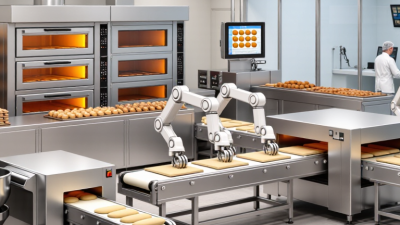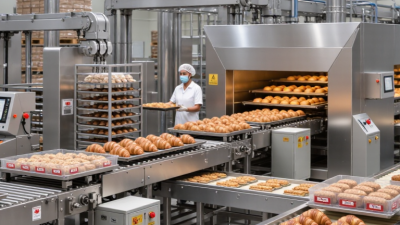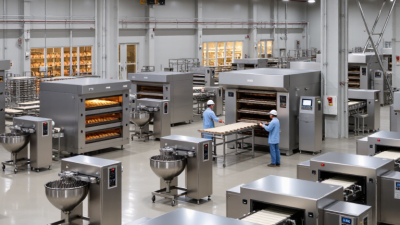
Bakery automation is no longer limited to large industrial plants. Compact mixers, dough dividers, proofers, and vision-guided packing lines now help bakeries manage rising costs and uneven demand. Yet buying equipment is not the same as improving production. A machine must fit the recipe, batch size, floor plan, and skill level of the team using it.
Management thinker Peter Drucker offered a useful test for any investment: “There is nothing so useless as doing efficiently that which should not be done at all.” His words were not about bakeries, but they apply well to bakery automation. Automating a poorly planned process can make waste faster. That is easy to overlook.
This guide to the Top 10 Bakery Automation Manufacturers in China examines more than product range. It considers equipment capabilities, customization, service support, integration, and the practical details buyers should verify. Can the line handle sticky dough? Are changeovers quick enough for several product types? What happens when a sensor needs adjustment during a busy shift? Small details matter.
No ranking can replace a factory visit or a product trial. Specs look neat on paper. Real production is messier. The manufacturers discussed here offer different strengths, and the best fit depends on each bakery’s actual needs—not the largest catalog or boldest promise. Use this overview as a starting point, then confirm claims directly with suppliers.
Top 10 Bakery Automation Manufacturers in China
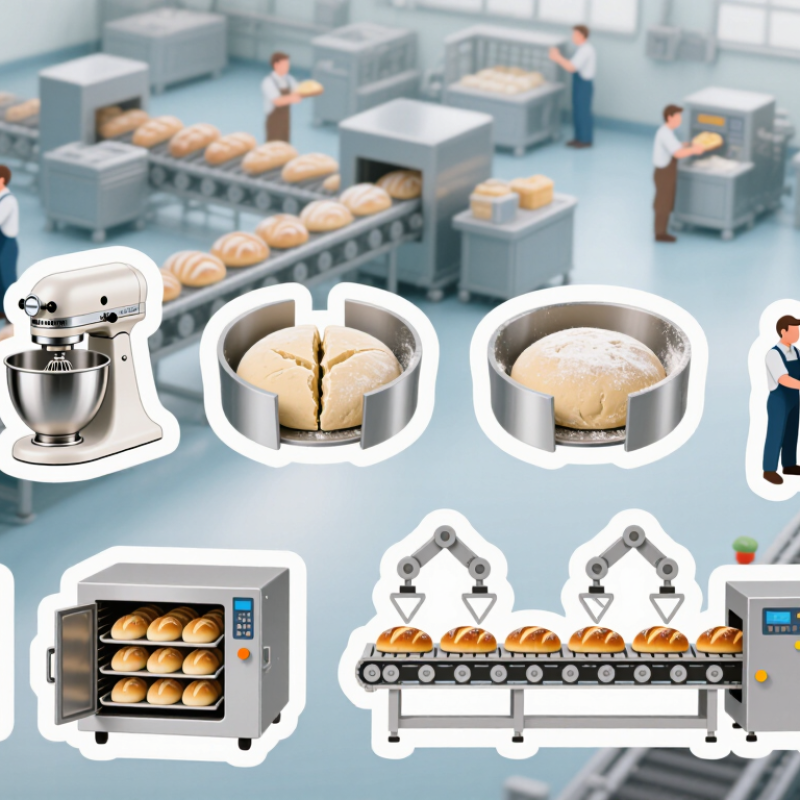
Bakery automation in China spans the full production line: flour dosing, mixing, dividing, proofing, baking, cooling, and packaging. A mixer may handle hundreds of kilograms per batch, but small changes in flour moisture can still affect dough texture. Sensors help track temperature and mixing time. They cannot fix every inconsistent ingredient.
The International Federation of Robotics’ World Robotics 2024 report recorded 276,288 industrial robot installations in China during 2023, about 51% of the global total. This figure covers all industries, not bakeries specifically. Still, it signals a broad automation supply base. In bakeries, robotic handling can move trays between ovens and cooling conveyors, while vision systems check product size and color. Packaging equipment then weighs, seals, and labels finished goods.
When comparing manufacturers, buyers should examine line integration, washdown design, spare-parts access, and changeover time. A fast packaging machine is less useful if upstream cooling creates a bottleneck. Ask for trials using your own dough and packaging film. Watch a full shift, not just a short demonstration. One detail is easy to overlook: operators still need clear access to clean crumbs from belts and guards. Automation reduces repetitive handling, but maintenance planning can remain surprisingly manual.
Ranking China’s bakery automation manufacturers requires more than comparing the highest advertised speed. Throughput should be verified on a defined product, such as wrapped buns or trays of sliced bread, and reported as saleable units per hour. Ask for a sustained run, changeover time, reject rate, and performance with real dough—not just a short factory demonstration. The International Federation of Robotics’ World Robotics 2024 report recorded 541,302 industrial robot installations worldwide in 2023. That figure shows automation’s scale, but it does not prove a bakery line will perform well.
Certifications matter when their scope matches the equipment and factory. Check current quality and food-safety certificates, their issuing bodies, and which production sites they cover. A certificate alone cannot confirm cleanable conveyor joints or reliable guarding. Service deserves equal weight: compare spare-parts availability, remote support hours, technician response targets, and commissioning plans. ISO 22400 provides a framework for production performance measures, including availability and quality; using consistent measures makes supplier comparisons fairer. No score is perfect. Weight each factor against the bakery’s actual products and shift pattern.
Tips: Request a witnessed acceptance test using your dough, recipe, and packaging. Record saleable output after changeovers, not peak speed. Ask for one service reference from a similar plant; small details can expose gaps that a polished presentation misses.
Supplier-specific rankings require comparable, verifiable company data. To avoid presenting unverified manufacturer claims as facts, the table below provides a transparent 100-point evaluation framework. Apply it to each supplier using documented evidence.
| Rank | Evaluation Dimension | Suggested Weight | Evidence to Check | How to Score Fairly |
|---|---|---|---|---|
| 1 | Verified line throughput | 20% | Factory acceptance-test results, production records, and stated output conditions. | Compare output only for the same product, product weight, operating hours, and line configuration. Distinguish rated capacity from demonstrated output. |
| 2 | Product and process compatibility | 14% | Test-bake records, product samples, and equipment specifications for the requested bakery products. | Assess whether the proposed line handles the buyer's recipes, dimensions, dough characteristics, and process stages. |
| 3 | Food-contact materials and hygiene design | 12% | Material declarations, component specifications, hygienic-design details, and cleaning instructions. | Verify materials and design against the destination market's applicable food-contact and sanitation requirements. |
| 4 | Certifications and regulatory documentation | 12% | Current certificates, issuing-body details, scope, validity dates, and equipment-specific compliance documents. | Check each document directly with its issuer. Do not treat a management-system certificate as product certification. |
| 5 | Automation and controls integration | 10% | Control-system documentation, interface specifications, alarms, recipe management, and integration test results. | Evaluate traceability, operator access, data export, and compatibility with the buyer's existing production systems. |
| 6 | Installation and commissioning capability | 9% | Project schedule, installation scope, commissioning protocol, and site-acceptance criteria. | Confirm responsibilities for utilities, site preparation, training, performance testing, and handover. |
| 7 | After-sales service and spare parts | 9% | Service terms, support channels, spare-parts list, warranty conditions, and response-time commitments. | Score written commitments and local support arrangements, not general marketing statements. |
| 8 | Energy use and operating efficiency | 6% | Utility consumption data measured under stated operating conditions. | Compare consumption per unit of saleable output, using equivalent products and production conditions where possible. |
| 9 | Customization and line scalability | 5% | Engineering drawings, configuration options, changeover details, and documented upgrade paths. | Assess fit with current space and production needs, plus the practicality of future capacity changes. |
| 10 | Commercial transparency and delivery terms | 3% | Itemized quotation, delivery schedule, warranty exclusions, payment terms, and contract scope. | Compare total project scope and contractual terms rather than equipment price alone. |
| Total Suggested Weight | 100% | Rank suppliers only after applying the same evidence requirements and scoring rules to each one. | ||
Scoring note: The weights are suggested evaluation choices, not audited industry statistics. Request comparable evidence from every supplier and record unavailable or unverified information as “Not verified” rather than estimating it.
When comparing bakery automation manufacturers in China, measure line capacity against your actual product, not a brochure’s best-case figure. Ask for sustained output in kg/h, with dough weight, hydration, proofing time, and changeover intervals stated. A line producing small buns may show impressive throughput, yet slow down with filled pastries or frequent size changes. Request a timed trial over several hours, and record accepted pieces and rejects. Numbers need context.
Energy use is clearer as kWh per tonne of finished product, measured across mixing, proofing, baking, and cooling where possible. Check whether the quoted figure includes idle time and startup heat; omissions can make offers look falsely comparable.
Oven control deserves equal attention. Ask whether operators can set top and bottom heat, airflow, belt speed, and zone temperatures independently. Review logged temperature trends during a full load. Heat matters. A reliable control system should recover steadily after door openings and help prevent pale edges or overbaked bottoms. Still, recipes and room conditions change results, so one test cannot settle performance. Keep the test protocol, calibration records, and utility readings with your equipment evaluation.
Proofing control deserves close attention when comparing bakery automation equipment. A practical commissioning benchmark is 30–38°C with 75–85% relative humidity. These are operating targets, not universal limits; dough formulation, piece size, and yeast activity all affect the result. Pyler and Gorton’s Baking Science & Technology describes temperature as a key driver of fermentation rate. In practice, a few degrees can change proofing time noticeably.
Small swings matter.
Humidity protects the dough surface. At the lower end, exposed pieces may develop a dry skin, limiting expansion. Near 85% RH, watch for condensation on cooler trays or chamber walls. The ASHRAE Handbook—HVAC Applications discusses the importance of managing temperature and moisture in conditioned spaces; bakeries should verify actual conditions with calibrated sensors, not rely only on controller displays.
Place probes near product height, away from direct steam outlets. Record readings across a full load, since crowded racks can create uneven airflow. This check is easy to skip. It should not be. Different doughs may still need trial batches, and the benchmark may require adjustment.
Manufacturer profiles are most useful when they show complete line capability, not just oven models. Chinese suppliers commonly offer mixers, dividers, moulders, proofers, ovens, cooling conveyors, and packing equipment. Some integrate controls across the full line; others specialize in individual machines. IFR’s World Robotics 2024 reports 541,302 industrial robot installations worldwide in 2023, including 276,288 in China. Its 2023 edition recorded 553,052 installations globally in 2022. These figures cover all industries, not bakery equipment, but they indicate a strong manufacturing base for automation. Ask whether a proposed line has been tested with dough similar to yours. A polished catalogue is not a production trial.
Customization can involve tray dimensions, dough hydration, oven zones, line speed, and factory layout. Export profiles should identify actual destination regions, installation experience, and language options for manuals and training. Check what support includes: commissioning, operator instruction, spare-parts lead times, and remote troubleshooting. Small details matter. A delayed sensor can stop a whole line. One limitation is that public export figures rarely isolate bakery machinery from broader food-processing equipment, so request verifiable references for comparable projects. Evaluate after-sales coverage alongside price, especially when technicians must travel across borders. Manufacturers’ support can vary, and written response times are worth checking before purchase.