Global demand for baked goods keeps rising, but buyers need more than a large catalogue. Grand View Research valued the global bakery products market at USD 513.17 billion in 2023 and projected a 5.4% compound annual growth rate from 2024 to 2030. These figures describe market demand, not the revenue of Chinese equipment or ingredient suppliers. That distinction matters.
China’s supplier base spans commercial ovens, mixers, production lines, packaging systems, and baking ingredients. For global buyers, the practical questions are concrete: Can an oven hold an even temperature across multiple trays? Are mixer parts easy to replace? Can a supplier provide clear specifications, sample testing, and responsive technical support? Julia Child, the chef and culinary educator, once asked, “How can a nation be called great if its bread tastes like Kleenex?” Her sharp line points to a central truth: consistency matters. In the baking industry, equipment performance and ingredient quality both shape the final loaf.
This guide introduces leading Chinese suppliers and the criteria buyers can use to compare them. It considers product range, manufacturing capabilities, customization, quality documentation, and after-sales service. Buyers should verify claims directly, request current certificates, and test products against their own recipes and production volumes. A polished catalogue is not proof. The comparison is imperfect, too: supplier information changes, and public data may not reveal factory-level performance. Careful due diligence remains essential.
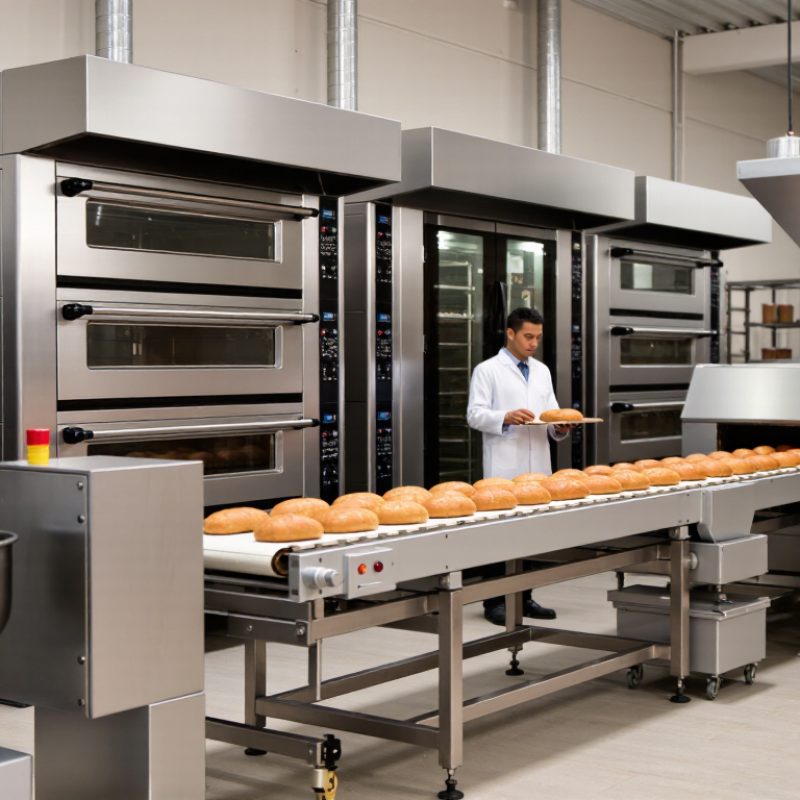
China’s baking supplier landscape is broad and increasingly specialized. The China Association of Bakery and Confectionery Industry estimated the country’s bakery market at about RMB 300 billion in 2023. That scale supports suppliers of flour, fats, fillings, ovens, mixers, packaging, and cold-chain services. Buyers may find ingredient and equipment makers clustered around major manufacturing regions, while smaller workshops often serve local bakeries with short lead times. Details matter.
Supplier choice is not just a price comparison. A flour supplier’s protein consistency can change dough handling; oven temperature variation can affect color across a full tray. Ask for batch records, food-safety documentation, equipment test results, and samples produced under your own process conditions. The market-size figure is an industry estimate, not a count of qualified exporters, and reporting methods can differ. That distinction is easy to miss.
Some suppliers offer integrated lines; others specialize in a single stage, such as depositors or packaging. Integrated sourcing can simplify coordination, but it may limit flexibility when one component underperforms. Remote factory audits also have limits. Check spare-part availability, response times, and operator-training plans before signing. A polished catalogue is useful, but it cannot replace a production trial.
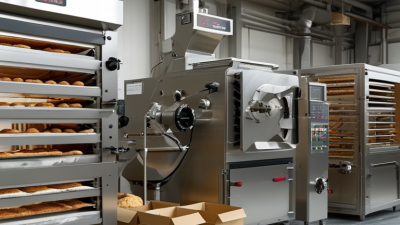
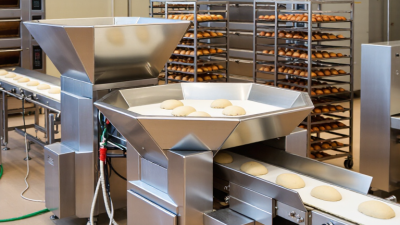
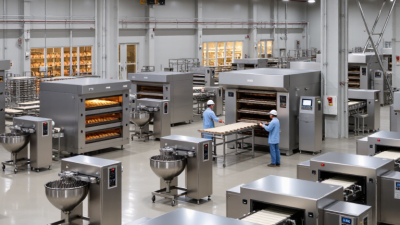
Chinese baking suppliers commonly offer ingredients, processing equipment, production lines, and packaging materials. Ingredient ranges include flour, yeast, fats, fillings, and functional blends for bread, cakes, and pastries. Equipment may include spiral mixers, dough dividers, sheeters, proofers, and deck or rotary ovens. Buyers should check practical details, not just capacity: a mixer’s batch size, an oven’s temperature consistency, and whether spare parts are available. Small details matter.
The market is broad. Allied Market Research’s Bakery Products Market report estimated global sales at US$416.6 billion in 2021 and projected US$590.6 billion by 2031. That forecast covers finished bakery products, not supplier equipment, so it should not be treated as a machinery-market estimate. Still, it helps explain why suppliers serve diverse production needs, from compact pastry workshops to automated bread lines. Packaging options include trays, cartons, and wrapping systems, while some suppliers also provide cooling or conveying equipment. One point is easy to miss: a fast line can create bottlenecks if proofing or cooling capacity is undersized. Compare samples, specifications, and production conditions before choosing; catalogue descriptions rarely reveal every limitation.
Chinese baking suppliers often divide into two distinct strengths: process machinery and formulated ingredients. Equipment makers are judged by throughput, temperature control, changeover time, and service access. Ask for trial data using your actual dough, not only a catalogue speed. Small details matter. A belt that drifts or an oven with uneven heat can spoil a full shift. FAO’s November 2024 Food Outlook estimated global cereal production at 2.848 billion tonnes for 2024. That scale makes ingredient availability important, but volume alone does not prove consistent baking performance.
Ingredient suppliers need to document protein, moisture, particle size, and batch variation. For flour, request recent certificates of analysis and samples from more than one production lot. USDA’s China Grain and Feed Annual reports track large-scale grain supply, but national figures cannot predict how a specific mill’s flour behaves in your recipe. That distinction is easy to miss. Equipment suppliers, meanwhile, should provide installation requirements, spare-parts lead times, and measurable acceptance tests. Compare suppliers by the evidence they can share, not by broad claims of “customization.” One practical limitation remains: sample tests may not reproduce months of factory wear, so references from comparable production lines still matter.
Choosing a Chinese baking-industry supplier starts with matching its product range to your actual needs. A supplier of ovens may not have the same expertise as one producing trays, mixers, or packaging. Ask for technical specifications, production capacity, and examples of comparable orders. Details matter. A polished catalog alone cannot show how equipment performs during a busy shift.
Request samples when possible, and test them under realistic conditions. For baking trays, check dimensions, finish, and heat consistency; for machinery, review operating instructions and maintenance requirements. Ask how defects are recorded and handled. Visit the factory or arrange an independent inspection if the order is substantial. A video tour can help, but it cannot replace every on-site check. That distinction is easy to overlook.
Review quality records, material documentation, and traceability procedures, then confirm that documents match the exact product being offered. Check relevant destination-market requirements with qualified advisers rather than relying on a supplier’s general assurance. Compare lead times, minimum order quantities, packing methods, and written warranty terms. Keep specifications and changes in writing. Communication may feel smooth before production, yet small details can drift; confirm measurements, labels, and delivery dates before approving the final order.
When evaluating baking industry suppliers in China, compare written specifications rather than relying on product photos. Ask for material details, dimensions, tolerances, and recent inspection records. For food-contact equipment or packaging, confirm which tests and declarations apply in your destination market. Requirements differ by country and product type, so verify them with your importer or customs adviser. Paperwork is not enough.
Before production, agree on sample approval, packaging, delivery terms, and responsibility for export documents. Request a commercial invoice, packing list, and certificate of origin when applicable. Check the tariff classification and estimated duties before placing the order; a small classification error can delay clearance. For long-distance freight, discuss moisture protection, pallet dimensions, and handling marks, especially for delicate trays or temperature-sensitive ingredients. Allow extra time. Port congestion, inspections, and document corrections can affect arrival dates. I would not treat a supplier’s delivery estimate as guaranteed; confirm key milestones and keep a buffer in the production schedule.
| Supplier Segment | Typical Products | Standards and Compliance Checks | Export Documents to Confirm | Logistics Considerations | Buyer Import Checks |
|---|---|---|---|---|---|
| Commercial oven and baking-line manufacturers | Deck, rotary-rack, convection, and tunnel ovens; proofers; integrated baking lines. | Confirm the exact model’s electrical ratings, fuel type, operating requirements, and destination-market conformity documents. For EU imports, determine which machinery and electrical rules apply to the product and shipment date; a CE mark alone does not identify every applicable requirement. | Commercial invoice, packing list, transport document, product specifications, manuals, and conformity or test documents when required for the destination market. | Check packed dimensions, gross weight, lifting points, crating, and port handling needs. Oversized equipment may require special transport or loading arrangements; container suitability depends on the shipment dimensions. | Verify local voltage, frequency, gas type, plug or wiring requirements, installation conditions, customs classification, duties, and any local inspection requirements before ordering. |
| Mixing and dough-processing equipment suppliers | Spiral and planetary mixers, dividers, rounders, sheeters, moulders, and dough-processing systems. | Request model-specific safety information, rated capacity, electrical details, and documentation for applicable destination-market machinery requirements. Check guarding and emergency-stop features against the intended use and local rules. | Invoice, packing list, bill of lading or air waybill, operating and maintenance manuals, spare-parts list, and applicable conformity documents. | Compare the cost and handling needs of full-container, less-than-container, or air freight options. Protect exposed controls and moving parts against moisture, impact, and corrosion during transit. | Confirm rated capacity under the supplier’s stated test conditions, available service support, installation needs, replacement-part availability, and the importer’s responsibility for customs clearance. |
| Baking trays, moulds, and food-contact component suppliers | Metal trays, moulds, racks, pans, and selected food-contact accessories. | Identify the material and any coating or surface treatment. For EU food-contact applications, assess relevant requirements including Framework Regulation (EC) No 1935/2004 and good manufacturing practice Regulation (EC) No 2023/2006. For the United States, check applicable FDA food-contact requirements for the specific material and use. | Invoice, packing list, material specifications, and relevant migration or compliance test reports where applicable to the product and destination market. | Confirm whether goods can be nested or stacked, how surfaces are protected, and whether packaging prevents deformation, abrasion, or contamination in transit. | Check food-contact suitability for the intended temperature, food type, and duration of use. Do not treat a generic material statement or test report as proof of compliance for every market or application. |
| Bakery packaging and packaging-machine suppliers | Bagging, sealing, wrapping, carton-handling, and other bakery packaging equipment; selected packaging materials. | For machinery, verify destination-specific safety and electrical requirements. For packaging that contacts food, check the applicable food-contact rules in the destination market and request documentation for the exact material and intended use. | Invoice, packing list, transport document, machine specifications and manuals, and food-contact declarations or test reports when relevant. | For machinery, check crate size, weight, and protection of sensors and control panels. For packaging materials, confirm roll or carton dimensions, moisture protection, and shipment quantities. | Confirm compatibility with the buyer’s product, packaging format, production speed, and local electrical supply. Check import rules for packaging materials separately from those for the machinery. |
| Bakery ingredient and premix suppliers | Flour blends, baking premixes, improvers, yeast products, fillings, and other ingredients, depending on the supplier’s product range. | Food import rules are product- and destination-specific. Check ingredient composition, additives, allergen declarations, labeling, shelf-life information, and any applicable sanitary, health, or phytosanitary requirements before shipment. | Invoice, packing list, transport document, product specification, batch and shelf-life information, and any destination-required health or origin certificates. | Confirm storage temperature, humidity limits, shelf life at arrival, packaging integrity, and whether the product requires temperature-controlled transport. | Verify that the product and ingredients are permitted in the destination market and that the label meets local requirements. In the United States, food importers should assess applicable FDA requirements, including FSVP obligations where applicable. |
| Spare-parts and bakery maintenance suppliers | Heating elements, belts, bearings, motors, sensors, controls, and replacement components for bakery machinery. | Request part numbers, material or electrical specifications, and any applicable safety or conformity documentation. Confirm compatibility with the exact machine model rather than relying on appearance alone. | Invoice, packing list, transport document, part-number list, and technical specifications; certificates may be needed for particular regulated components or destinations. | Small, urgent parts may be suitable for air or courier shipment; larger or routine consignments can be consolidated. Protect electrical and precision parts from moisture and impact. | Check customs classification, declared value, warranty terms, compatibility, and whether the replacement part affects the machine’s conformity or warranty status. |
| General import note: Product standards, certificates, customs classification, duties, and permits depend on the product and destination. Common export paperwork can include a commercial invoice, packing list, and bill of lading or air waybill; certificates of origin and product-specific documents are required only where applicable. Confirm the current requirements with the relevant customs authority, regulator, and freight provider before shipment. | |||||