How to Choose the Best Bakery Proofer for Your Business?
Choosing the best bakery proofer for your business is not simply a matter of selecting the largest cabinet. It is a production decision that affects dough strength, flavor, labor, and daily consistency. Jeffrey Hamelman, a respected baker, educator, and author, has said, “The dough is the boss.” That principle matters when evaluating any bakery proofer. The machine must support your dough, not force every recipe into the same conditions.
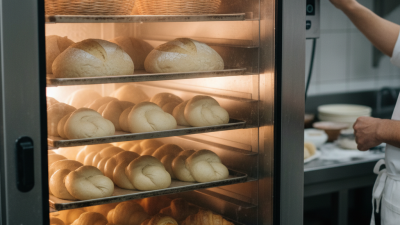
A reliable bakery proofer should provide stable temperature, controlled humidity, accurate sensors, and enough capacity for your busiest shift. Picture a morning production room: trays enter at 28°C, the dough must remain protected from dry air, and staff need clear controls during a rush. Check insulation quality, door seals, water management, cleaning access, and service availability. A low purchase price may look attractive. Replacement parts and uneven proofing can cost more later. That is easy to underestimate.
Your products should guide the final choice. Enriched brioche may need different humidity than lean sourdough. Frozen dough may require a longer, gentler schedule. Small bakeries might value flexible shelving, while high-volume operations need programmable cycles and dependable recovery after frequent door openings. No checklist is perfect. Real production can be messier. Record dough temperature, proofing time, and final volume during trials. Then compare results honestly. The best bakery proofer is the one that fits your recipes, staff skills, available space, and growth plans—not merely the model with the most features.
Define Your Bakery’s Proofer Requirements
How to Choose the Best Bakery Proofer for Your Business?
Define Your Bakery’s Proofer Requirements
Start with your dough, not the equipment catalogue. Record daily batch size, tray dimensions, dough weight, and peak production hours. Then measure the temperature and humidity in your current proofing area. Small variations can change volume, crust texture, and baking time. Commercial dough commonly needs approximately 30–38°C and 75–85% relative humidity, but each formula behaves differently. ASHRAE’s HVAC guidance supports controlling temperature and moisture separately, especially where heat loads change quickly. Do not treat these figures as universal. Your flour, yeast level, and fermentation schedule may require adjustment.
Capacity should match your busiest realistic shift, not your average morning. A proofer holding 20 trays may be unsuitable if your production regularly reaches 30 trays. Leave room for airflow around each rack. Uneven spacing creates pale corners and over-proofed centers. The International Energy Agency reports that buildings consume about 30% of global final energy, making efficiency a practical operating concern. Compare insulation, door sealing, standby consumption, and recovery time after loading. Ask for measured energy data, not vague efficiency claims. My first capacity estimate would often be too optimistic; a short trial with real trays is more reliable. Track proofing time, humidity recovery, product height, and electricity use for several production days.
Compare Different Types of Bakery Proofers
Choosing a bakery proofer starts with production reality, not a glossy specification sheet. The Research and Markets 2024 Bakery Processing Equipment Global Market Report projects steady market growth through 2028. That trend reflects rising demand for consistency and labor efficiency. Still, bigger is not always better. A small bakery may lose money heating an oversized chamber.
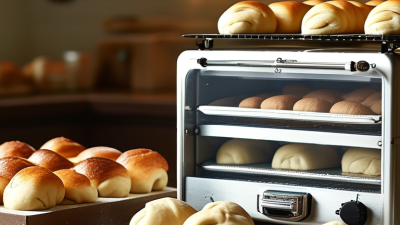
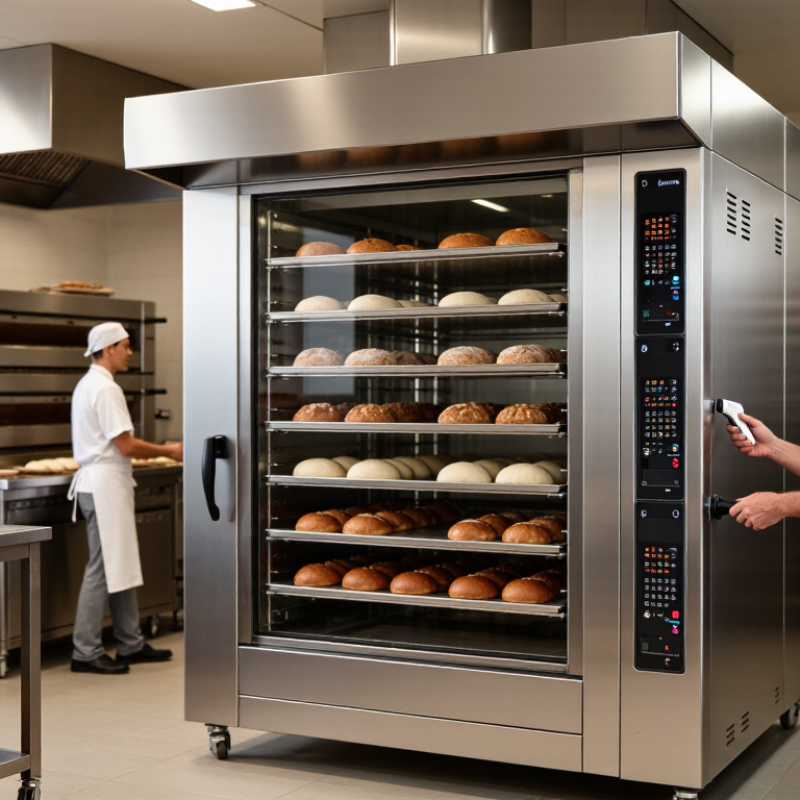
A cabinet proofer suits limited batches and frequent product changes. It offers straightforward temperature and humidity control, often with lower installation costs.
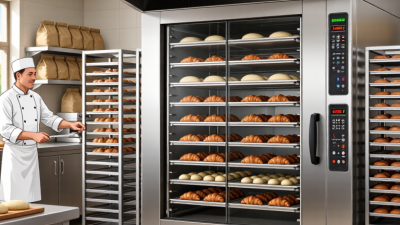
A walk-in or room proofer supports larger trays and easier loading. However, it consumes more floor space and may create uneven airflow near the door.
A retarder-proofer combines chilled holding with controlled fermentation. It can protect overnight schedules, but programming errors may overproof delicate dough. Tunnel systems fit high-volume lines, where continuous movement matters more than flexibility.
Test each option with your own dough. Measure proofing time, recovery after door opening, water use, and temperature variation at tray level. The U.S. Department of Energy’s Commercial Buildings Energy Consumption Survey shows that food-service buildings carry substantial energy demands, so insulation and standby consumption deserve attention.
My first instinct would be to prioritize capacity. I would question that choice after observing half-empty racks and slow changeovers. The best comparison should include three trial batches, cleaning time, operator training, and maintenance access. Fancy controls help only when staff can use them confidently.
Calculate Capacity, Size, and Production Needs
Choosing a bakery proofer starts with production math, not cabinet appearance. Grand View Research’s 2024 bakery-products analysis valued the global market at about USD 579.4 billion in 2023, with projected growth near 6.7% annually through 2030. Demand can rise quickly. Your proofer must handle today’s workload and realistic near-term growth.
Record the dough pieces produced per batch, proofing time, tray count, and daily batches. Use this formula: required capacity equals pieces per batch multiplied by batches in progress. For example, 120 rolls per batch, four active batches, and 15% spare capacity require about 552 roll positions. My first estimate was too optimistic because I ignored loading delays. Production rarely moves perfectly. Allow extra space for uneven fermentation, seasonal orders, and staff interruptions. A 600-position unit may be safer than a tightly packed 552-position model.
Measure the room carefully. Leave clearance for door movement, ventilation, cleaning, and trolley access. The proofer’s external size matters as much as its internal capacity. The 2024 International Energy Agency buildings analysis highlights the importance of reducing operational energy demand, so compare insulation, humidity controls, and standby consumption. Choose temperature and humidity ranges that match your formulas, not generic specifications. High-volume bread may need stable humidity, while delicate dough can suffer from condensation. Track actual cycle times for two weeks. The numbers may challenge your assumptions. That is useful.
How to Choose the Best Bakery Proofer for Your Business
Compare your daily production target with the estimated capacity of different proofer sizes.
The calculation assumes 12 pieces per 60 × 40 cm tray and six proofing cycles per day.
Capacity formula: tray count × 12 pieces per tray × 6 cycles per day. Select a proofer that exceeds your target to allow for peak demand, loading space, and production delays.
Evaluate Temperature, Humidity, and Control Features
How to Choose the Best Bakery Proofer for Your Business?
Temperature and humidity determine how dough develops, expands, and holds its shape. ASHRAE Handbook—HVAC Applications (2023) identifies stable heat and moisture control as essential for process consistency. In practical terms, many yeast doughs perform well around 30–38°C and 75–85% relative humidity. Humidity matters more. Low moisture can create a dry skin before baking, while excessive moisture may leave dough weak and sticky.
Do not judge a proofer by its display alone. I once trusted a digital reading that showed 34°C, but an independent probe found a six-degree difference near the door. That gap changed loaf volume across the same batch. Choose equipment with calibrated sensors, adjustable humidity, uniform airflow, and alarms for temperature drift. A data logger is useful. It exposes patterns that a quick visual check misses. Test recovery time after opening the door, too.
Energy use deserves attention. The International Energy Agency’s Energy Efficiency 2023 report highlights process control as a practical route to reducing commercial energy waste. Look for insulated doors, programmable cycles, and standby settings. Grand View Research’s 2024 bakery products report valued the global bakery market at more than 600 billion U.S. dollars in 2023, increasing pressure for reliable production. Still, bigger capacity is not automatically better. An oversized chamber may heat unevenly during smaller runs. Measure your actual batch size, loading frequency, and peak-season demand before choosing. Expect to adjust your settings; flour, dough temperature, and room conditions will not behave perfectly every day.
Assess Energy Use, Maintenance, Safety, and Total Cost
How to Choose the Best Bakery Proofer for Your Business?
Choosing a bakery proofer requires more than matching cabinet size to daily output. In a working bakery, energy use appears in every warm-up cycle and overnight hold. Compare rated power, insulation quality, humidity controls, and recovery time after door openings. A lower purchase price can hide higher electricity bills. Ask for test data, not optimistic estimates. Meter readings from a busy production week are more useful.
Maintenance affects both cost and consistency. Look for removable racks, accessible heating elements, washable seals, and simple drain access. Staff should clean condensation and flour residue before buildup affects airflow. Keep a log of faults, cleaning, and replacement parts. It may feel excessive, but small records reveal recurring failures. A proofer needing specialist service for a basic sensor can interrupt morning production. Check spare-part availability before signing a purchase order.
Safety deserves a practical inspection. Confirm stable doors, guarded heating components, reliable temperature limits, and clear controls. Wet floors near drains create a real slipping risk. Train staff to handle hot surfaces and verify temperatures with a calibrated thermometer. Total cost includes installation, ventilation changes, water use, energy, labor, repairs, and downtime. Calculate cost per batch over several years, then challenge the assumptions. My estimates are rarely perfect. Seasonal demand and careless door opening can change them quickly. Leave room for that uncertainty.