What Are the Top Bread Making Equipment Types in 2026?

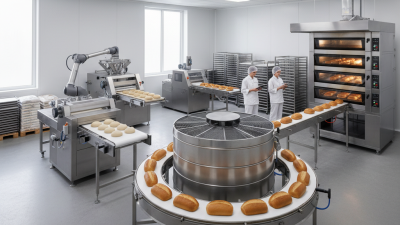
In 2026, bread making equipment is becoming more precise, connected, and energy-conscious. Yet dependable baking still begins with practical decisions. A small artisan bakery may need a spiral mixer, dough divider, proofing cabinet, deck oven, and cooling rack. A supermarket production line may require continuous mixers, automated moulders, tunnel ovens, and packaging systems. The best choice depends on output, dough style, available space, labour, and maintenance support.

Jeffrey Hamelman, a respected baker, educator, and author of Bread: A Baker’s Book of Techniques and Recipes, once wrote, “Bread is a living thing.” His observation remains valuable when comparing modern equipment. A programmable mixer can repeat a recipe, but it cannot fully judge dough temperature or gluten development. A smart proofer can control humidity, but poor fermentation timing still affects flavour. Small details count.

This guide examines the top bread making equipment types expected to matter in 2026. It considers performance, workplace safety, cleaning demands, energy use, and long-term reliability. It also distinguishes essential machines from attractive upgrades. Not every bakery needs everything. A compact deck oven may outperform a larger automated system for a high-quality sourdough shop. That is not a universal rule, however. Equipment recommendations can change with production volume, regional service access, and staff experience. A careful buyer should test dough batches, review warranty terms, and calculate operating costs before investing. Some choices remain debatable. That is precisely why thoughtful evaluation matters.
What Are the Top Bread Making Equipment Types in 2026?

Raw-Material Systems: Mixers Handling 10–300 kg Dough Batches

Raw-material systems shape every stage of bread production, from flour loading to dough release.

Mixers handling 10–300 kg batches must match the bakery’s recipe, schedule, and available floor space. A small spiral mixer suits artisan batches near 10 kg. Larger spiral or horizontal mixers support continuous production and heavier dough loads.

Capacity alone can mislead. A 300 kg mixer may hold enough dough, but stiff formulas create greater motor resistance.

Water temperature, flour absorption, and mixing time also affect the working load.

In practical bakery trials, operators should record dough temperature after mixing. This simple check often reveals problems before fermentation begins.

Ingredient charging needs equal attention.

Accurate weighing systems reduce recipe variation, while enclosed transfer lines limit flour dust around the mixing area. Load cells can improve control, but they require regular verification. Sensors drift. People miss checks. A reliable system combines automation with a clear manual procedure.

Mixing tools should be chosen for the dough’s structure. Spiral tools develop strong gluten with moderate heat, while planetary systems handle varied products and smaller recipes.

Horizontal mixers can manage dense dough, yet cleaning access may become difficult. I have found that easy sanitation is sometimes valued too late.

A mixer that saves ten minutes during production may cost an hour after a sticky batch. Operators should test real recipes, not only water, before approving equipment.

Dough Dividers and Moulders: Achieving ±2% Portion-Weight Accuracy

What Are the Top Bread Making Equipment Types in 2026?

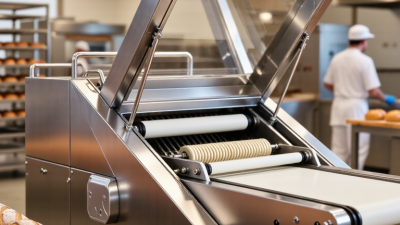
Dough dividers and moulders are becoming essential for consistent commercial baking. At a 500-gram target, ±2% portion accuracy means every piece should weigh between 490 and 510 grams. That sounds simple. It is not.

PMMI’s 2024 automation report identifies labor shortages and operator consistency as major reasons for bakery automation. Dough dividers reduce manual variation by controlling pressure, speed, and cutting cycles. Moulders then shape each portion with repeatable tension. However, accuracy depends on dough temperature, hydration, gluten development, and hopper filling. A perfect machine cannot correct unstable dough.

Small details matter.

The American Bakers Association’s 2024 industry profile places the U.S. baking sector’s economic contribution above 150 billion dollars, with employment near 800,000 workers. At this scale, a two-percent weight difference can create noticeable ingredient waste across thousands of loaves. A checkweigher should verify samples throughout production, not only during setup. Operators should record dough temperature, portion weight, and reject rates every shift. In practice, ±2% may still be difficult during rapid changeovers. That limitation deserves honest review. Better results often come from slower feeding, routine calibration, and clearer operator training, rather than buying more complex equipment.

What Are the Top Bread Making Equipment Types in 2026? - Dough Dividers and Moulders: Achieving ±2% Portion-Weight Accuracy

Equipment Type Primary Function Typical Dough-Weight Range Typical Capacity Portion-Weight Accuracy Common Dough Applications Key Operating Considerations
Hydraulic Dough Divider Divides bulk dough into equal portions using a piston and cutting head. 30–1,800 g per piece 600–1,800 pieces per hour Typically ±2% to ±4% Lean bread, rolls, buns, and standard sandwich loaves Accurate scaling depends on dough temperature, hydration, dough pressure, and correct chamber adjustment.
Volumetric Dough Divider Uses fixed-volume chambers to portion dough continuously. 20–1,500 g per piece 1,000–4,000 pieces per hour Typically ±2% to ±5% High-volume rolls, burger buns, and everyday bread products Best suited to doughs with consistent density; very sticky or highly enriched dough may require additional control.
Weight-Based Dough Divider Measures each dough portion by weight before discharge. 20–2,000 g per piece 600–2,400 pieces per hour Typically ±1% to ±2% Artisan loaves, premium rolls, filled dough products, and varied product sizes Provides tighter weight control but generally requires more sensors, calibration, and operator setup.
Divider-Rounder Divides bulk dough and rounds individual pieces in one integrated process. 25–1,200 g per piece 900–3,600 pieces per hour Typically ±2% to ±4% Small rolls, dinner rolls, buns, and uniformly shaped dough pieces Rounding pressure must be matched to dough strength to avoid tearing, overheating, or excessive degassing.
Intermediate-Proofing System Allows divided dough pieces to relax and ferment before moulding. Usually 30–1,000 g per piece 1,000–6,000 pieces per hour Maintains input weight; does not perform primary dividing Rolls, buns, baguettes, and sandwich bread Typical dwell time is about 8–20 minutes, depending on dough formula, temperature, and desired extensibility.
Conical Round Moulder Rounds and smooths dough pieces around a rotating cone and track. 30–1,500 g per piece 1,000–4,000 pieces per hour Weight accuracy depends on the upstream divider Rolls, buns, bread preforms, and dough pieces requiring a smooth skin Track clearance, flour dusting, dough temperature, and surface tension affect shape consistency.
Long Moulder Shapes rounded dough pieces into elongated loaves or intermediate blanks. 50–1,500 g per piece 600–2,400 pieces per hour Weight accuracy depends on the upstream divider Baguettes, bâtards, sandwich loaves, and elongated rolls Roller gap and pressure should be adjusted to avoid excessive degassing and uneven loaf structure.
Sheeting and Moulding Line Sheets dough, reduces thickness progressively, and forms it into a consistent loaf shape. 200–2,000 g per piece 800–3,000 pieces per hour Typically ±2% to ±4% when paired with controlled dividing Pan bread, toast bread, sandwich loaves, and rolled specialty breads Correct sheeting pressure and degassing settings help control crumb structure and final loaf volume.
Servo-Controlled Divider and Moulder Line Combines automated portioning, conveying, rounding, and moulding with recipe-based controls. 30–2,000 g per piece 1,500–6,000 pieces per hour Target capability: ±2% or better under controlled conditions High-volume bread, buns, rolls, and multi-format production Stable dough temperature, regular calibration, accurate sensors, and consistent feeding are essential for maintaining the target.

Note: Actual performance varies with dough hydration, flour strength, dough temperature, fermentation level, piece size, machine configuration, and calibration. The ±2% target refers to portion-weight deviation under controlled production conditions and should be verified through production trials.

Proofers: Maintaining 35–38°C and 75–85% Relative Humidity

Proofers are among the most important pieces of bread-making equipment in 2026. They create a controlled environment for dough fermentation, especially when room conditions change. A reliable proofer should maintain 35–38°C and 75–85% relative humidity. These ranges help dough expand steadily without forming a dry skin.

Small changes matter. A two-degree increase can accelerate fermentation and weaken dough structure. Excess humidity may create surface moisture, while low humidity can leave cracked edges. Use an independent thermometer and hygrometer to verify the built-in controls. Sensors can drift over time. Calibrate them regularly.

Keep trays spaced apart so warm air can circulate around each piece. Avoid opening the door repeatedly. Each opening releases heat and moisture, forcing the system to recover. Dough temperature also affects results, so record it before loading the proofer. A simple production log can show whether under-proofing comes from time, temperature, or yeast activity.

Clean water reservoirs and interior surfaces frequently. Standing water can produce unpleasant odors and uneven humidity. I have found that rushed cleaning often causes more trouble than incorrect settings. Still, the ideal range is not universal. Enriched dough, lean dough, and sourdough may need different proofing times. Watch dough volume and elasticity, not the clock alone. When a fingertip leaves a slow, shallow mark, the dough is often close to ready.

Proofer Operating Targets for Bread Making in 2026

Proofers are typically operated at 35–38°C with 75–85% relative humidity to support consistent dough fermentation and help prevent surface drying.

Industrial Ovens: Baking at 200–250°C to a 96–99°C Core Temperature

Industrial ovens are central to modern bread production. They commonly bake loaves at 200–250°C, depending on dough size, sugar, fat, and crust color. The air temperature is not the finished-bread temperature. A probe placed in the loaf center should usually read 96–99°C. That core reading indicates starch gelatinization and moisture setting, not simply oven exposure.

In daily production, operators load trays evenly and avoid blocking airflow. Convection systems move heat quickly, while deck ovens transfer strong heat through the baking surface. Steam at the beginning helps delay crust formation and supports expansion.

After steaming, controlled airflow dries the crust and develops color. A calibrated probe matters. Read the center, not the edge. Small loaves may reach 98°C quickly, while dense whole-grain loaves need longer heating at the same oven setting.

“I have seen pale bread leave an oven with a hot crust but a slightly gummy center. The temperature display looked correct. The load was not. This is an easy mistake. Record dough weight, proof height, bake time, humidity, and core temperature for each batch. Check probes regularly against a reference thermometer. Do not chase a number blindly. Excessive heat can darken the crust before the crumb sets, while a lower setting may improve moisture balance but reduce throughput. Even experienced teams need to question familiar settings when flour, batch size, or seasonal humidity changes.

Cooling, Slicing, and Packaging: Processing 10–15 mm Slices at Scale

What Are the Top Bread Making Equipment Types in 2026?

Cooling, Slicing, and Packaging: Processing 10–15 mm Slices at Scale

In 2026, high-volume bakeries need more than reliable ovens. Cooling conveyors, precision slicers, and automated packaging lines now control product quality after baking. Bread should cool evenly before slicing, or trapped steam may soften the crumb and cause uneven cuts. For 10–15 mm slices, a servo-controlled slicer helps maintain thickness across long production runs. Sharp, well-aligned blades reduce tearing, crumbs, and rejected packs. Operators should still inspect the first loaves from every batch. Machines are consistent, but dough rarely is.

Tips: Allow enough cooling time. Measure slice thickness often. Keep blades clean and properly tensioned. Use gentle transfer belts to prevent crushed edges. Test packaging seals during shift changes. A small adjustment can prevent hundreds of damaged packs.

Packaging equipment should match the bread’s moisture, shape, and sales speed. Flow wrapping suits continuous lines, while bagging systems can handle varied loaf sizes. Film tension matters because loose packaging looks careless and may allow faster staling. Excessive tension can compress thin slices. I have seen efficient lines lose quality through rushed changeovers. That mistake is easy to repeat.

Record temperature, slice thickness, seal strength, and waste by shift. These records support practical maintenance and reveal problems before customers do. At scale, the best equipment is not always the fastest. It is the system that protects texture from cooling tunnel to finished package.