

How to Choose the Best Baking Cooler in 2026?
Choosing the best baking cooler in 2026 starts with understanding what your bakery actually needs. A compact cooling rack may suit a home kitchen, while a busy shop may need a mobile rack or powered cooling cabinet. These options are not interchangeable. Match the equipment to your daily batch size, available floor space, and the products you cool. A tray of cookies needs different airflow and clearance than several sheet pans of bread.
Look beyond advertised capacity. Check tray dimensions, shelf spacing, construction materials, cleaning access, and the manufacturer’s care instructions. Stainless steel can be practical in a high-use kitchen, but welds and corners still need careful cleaning. For powered models, compare airflow, noise, energy use, and service requirements using product specifications rather than broad claims. Details matter. If possible, measure your doorway and work area before ordering; a cooler that cannot pass through the entrance is an expensive surprise. Reviews can reveal everyday problems, but confirm important claims with the manufacturer or a qualified supplier. No checklist captures every busy shift. That limitation is worth admitting. This guide will help you weigh those trade-offs and choose a baking cooler that fits your workflow, budget, and cooling needs—not just the most impressive product listing.
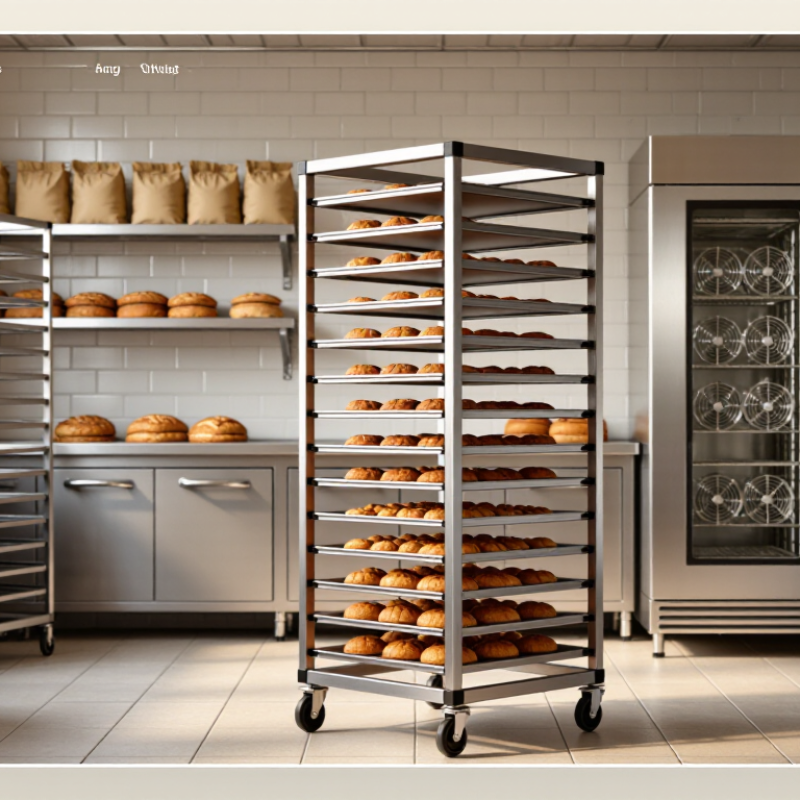
What a Baking Cooler Is and How It Supports the Baking Process
A baking cooler, often called a cooling rack, is a raised, open structure that lets air move around freshly baked food. Unlike a solid countertop, its wire grid exposes the bottom of a loaf, cake, or tray of cookies to airflow. This helps heat escape more evenly and reduces trapped steam, which can soften crisp crusts. The rack does not cool food instantly. It simply gives heat a better path out.
That matters after baking. A loaf left on a hot pan may continue cooking underneath, while cookies can turn damp where they touch the surface. Move them gently to a stable rack, leaving a little space between pieces. Air needs room. For practical use, check that the rack sits level, feels sturdy under a warm cake, and has gaps narrow enough to support smaller cookies. A washable, food-safe surface is useful, too.
Cooling time varies with recipe, size, and room conditions, so a fixed number of minutes is only a rough guide. I used to think a rack solved every texture problem; it does not. A humid kitchen can still soften crisp pastry, and a delicate cake may need to cool in its pan before transfer. Choose a cooler that fits your usual batches and storage space, rather than the largest one available.
How to Choose the Best Baking Cooler in 2026? — What a Baking Cooler Is and How It Supports the Baking Process
A baking cooler is a rack or cooling setup that lets baked goods release heat after baking. Open space around the product helps heat and moisture escape, reducing soggy bottoms and supporting more even cooling. Cooling time varies with product size, recipe, room conditions, and airflow.
| Cooling Setup | Typical Construction | Airflow and Capacity | Best Suited For | How It Supports Baking | What to Check Before Choosing |
|---|---|---|---|---|---|
| Wire cooling rack | Food-contact metal wires arranged in a grid, usually with raised feet. | Air can circulate beneath and around items. Capacity depends on rack dimensions and wire spacing. | Cookies, muffins, biscuits, small loaves, and home or small-batch baking. | Allows steam to escape from the base as well as the sides, helping crisp baked goods stay crisp. | Check stability, rust-resistant construction, wire spacing, and whether the rack fits your work surface or sheet pan. |
| Stackable cooling racks | Multiple wire rack tiers designed to sit securely above one another. | Uses vertical space; airflow depends on the gap between tiers and how closely the racks are loaded. | Batch baking when counter space is limited, especially cookies and pastries. | Creates extra cooling area without requiring a wider work surface. | Look for a stable stacking design, adequate tier clearance, and easy access to each level. |
| Sheet-pan cooling rack | A wire rack sized to sit inside a rimmed baking sheet. | Provides airflow while the pan catches crumbs, glaze, or drips. | Glazed pastries, frosted items, roasted-style baked goods, and mess-prone finishing work. | Keeps food elevated during cooling or decorating while containing runoff for easier cleanup. | Match the rack to the pan’s interior dimensions and confirm the rack sits level without rocking. |
| Full-size bakery cooling rack | Large, sturdy rack or trolley with several shelves, often designed for bakery trays. | High batch capacity; open shelf spacing supports circulation when trays are not overcrowded. | Commercial kitchens and production baking with repeated tray loads. | Organizes multiple batches and keeps hot trays off benches, improving workflow and cooling consistency. | Verify tray compatibility, load rating, shelf spacing, wheel locks if applicable, and available floor space. |
| Perforated cooling tray | Flat food-grade tray with holes or a perforated surface. | Allows some airflow through the base; performance depends on hole pattern and tray loading. | Products that need a flat support surface or are too delicate for widely spaced wires. | Offers more continuous support than an open wire grid while still allowing some moisture to escape beneath the product. | Check hole size, surface finish, cleanability, and whether the product can be lifted off without sticking. |
| Room-temperature cooling area | A clean, dry, well-ventilated bench or designated cooling station used with suitable racks. | Capacity is determined by available rack space and the distance between products. | Most breads, cakes, cookies, and pastries after baking, when no rapid chilling is required. | Gives baked goods time to set and release residual heat before slicing, packaging, or decorating. | Keep the area clean and away from strong drafts, steam, and raw-food handling; avoid stacking warm products tightly. |
Related Posts
-
Top Bakery Manufacturing Companies for Global Buyers
-
2025 How to Implement Bakery Automation for Increased Efficiency and Profitability
-
2025 Top 10 Bakery Systems You Need to Know for Your Business
-
Top 10 Bakery Automation Solutions for Global Buyers?
-
2026 How to Choose the Best Bakery Systems for Your Business?
-
Top Tips for Sourcing Quality Baking Supplies Worldwide?