
China’s paperboard market is large, but scale alone does not identify a dependable gloss art board supplier. The China Paper Association reported 144.05 million tonnes of paper and paperboard production in 2023, with consumption at 131.65 million tonnes. These figures describe the broader sector, not gloss art board specifically. Buyers still need product-level evidence, such as coating consistency, caliper tolerance, print results, and batch traceability.
Paper scientist Richard Kerekes’s research in pulp-and-paper engineering offers a useful lens for evaluating the sheet beneath its finish. A practical buyer’s reminder is: “Gloss is visible; consistency is proven on press.” Treat that as a selection principle, not a verified quotation from Kerekes. In real production, a coated sheet may look bright under showroom lights yet show uneven ink coverage or curling after printing. Samples should be tested on the intended press and finishing line.
This guide examines leading Chinese suppliers of Gloss Art Ardboard, comparing their product range, manufacturing capabilities, quality controls, and export experience. Supplier claims deserve careful checking. Request current technical data sheets, recent test results, and references for comparable orders. A small gap in coating weight or moisture control can become costly across a full run. The right partner is not simply the one with the lowest quote; it is the one whose documented performance matches the job.
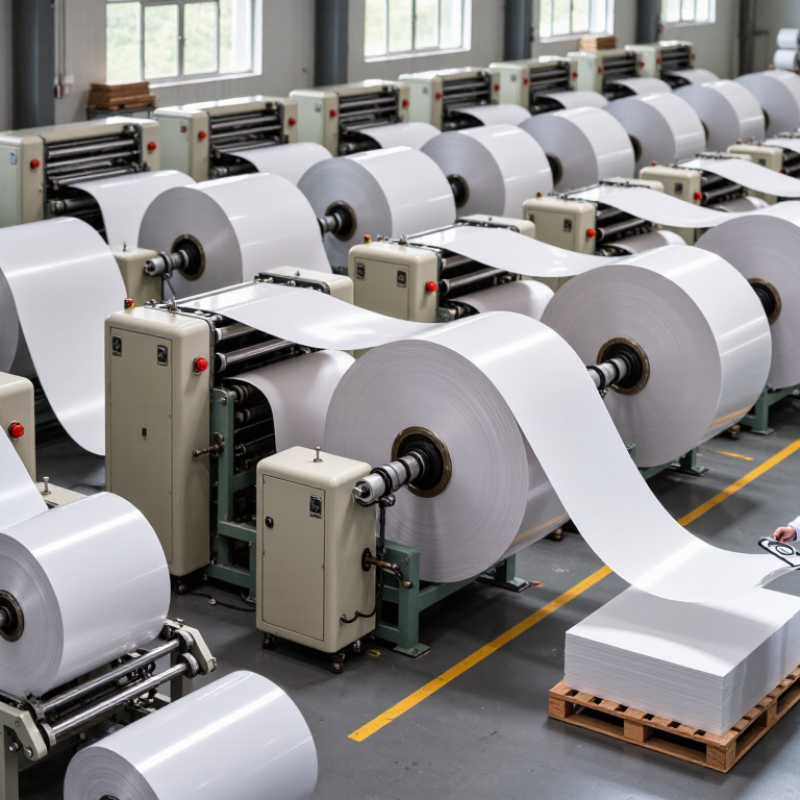
Gloss art board is paperboard with a smooth mineral coating on one or both sides. The coated surface supports crisp text, fine images, and a bright finish. Common grades fall between 200 and 400 gsm. Lighter sheets are easier to fold, while heavier ones feel more substantial. GSM measures mass per square metre, not thickness or stiffness. A 300 gsm sheet can feel quite different across mills.
The coating and finishing process shape performance. Clay or calcium carbonate coatings help create a smoother printing surface; calendering adds gloss and can affect sheet density. China Paper Association’s 2023 industry statistics reported 144.29 million tonnes of paper and paperboard production. That figure describes the broad market, not gloss art board alone. It is useful context, but not a measure of available coated grades.
For buyers, check whether the board is coated on one side or both, then compare caliper, brightness, moisture, and folding behavior. Request a sample and test it with the intended ink and finishing method. Small details matter. A glossy face may look impressive under showroom lights, yet crack at a tight fold. I would not choose by gsm alone; the specification sheet can still leave out how the board behaves on a real press.
China Paper Association’s 2023 annual report recorded 129.65 million tonnes of paper and paperboard production nationwide. That figure gives market context, not a supplier’s gloss-board capacity. Ask for product-specific output, recent monthly records, machine widths, and typical lead times. Then compare promised volume with actual dispatch history. A large mill is not automatically a reliable partner.
Check whether its range covers your required grammage, thickness, gloss level, coating sides, and sheet or roll formats. Request samples from more than one production batch. Inspect surface smoothness under angled light, and test stiffness, printability, and coating consistency. Small differences matter. Supplier brochures rarely show them. China’s national output data cannot confirm individual quality, so independent testing and a factory audit add useful evidence.
Export experience needs similar scrutiny. Ask for recent shipment records, destination markets, packing specifications, and references from comparable buyers. Confirm how the supplier handles moisture protection, container loading, document accuracy, and damage claims. A polished export presentation can still hide weak follow-through. I would compare a trial order with the agreed sample before committing to recurring volume; even this check can miss problems during peak season.
China’s largest paper groups offer very different strengths, so compare the four suppliers on the same coated-board specification. China Paper Association’s 2023 Annual Report records 129.65 million tonnes of paper and paperboard production nationwide. That figure shows the scale of the industry, but it is not a gloss-board ranking. Keep that distinction clear.
Request samples at the exact grammage you plan to buy. Check gloss, whiteness, stiffness, caliper, and coating uniformity under the same lighting. Then run a press test: a sheet that looks bright on a desk may show picking, curl, or uneven ink coverage at production speed. Ask each mill for recent batch tolerances, lead times, minimum order quantities, and export packing details. Small differences matter.
Scale matters. Samples matter more. The four suppliers should be compared by documented performance, not assumed reputation. Ask for test data tied to the actual batch, and verify it with your own printer. A caution: published specifications may not predict performance after storage or transport. I would avoid naming a single “top” supplier without matching grade, price, delivery, and print results to the buyer’s use case. That comparison takes work, and the evidence can still be imperfect.
When comparing gloss art board suppliers in China, request recent mill test reports and production samples. Start with grammage: weigh conditioned sheets and compare the result with the declared basis weight and tolerance. Check several points across each sheet, not just one coupon. Small variations can affect stiffness, feeding, and finished thickness. It matters.
ISO brightness measures reflected blue-light whiteness, not overall visual quality. Confirm the test method, then compare samples under consistent lighting. Optical brighteners may lift readings without matching the appearance you want in print. Measure gloss at a stated angle, commonly 75 degrees for paper, and ask for the test method. Higher gloss is not automatically better. It may increase glare or expose coating unevenness.
Cobb60 records water absorbed over 60 seconds, usually in grams per square metre. Compare results using the same procedure and conditioning; lower absorption may help resist water, but printing performance still depends on ink and coating. Ask for repeat readings from multiple sheets and a sample from a regular production run. One polished sample proves little. I would not overlook that. Lab figures can also miss variation across a full pallet, so review both test data and delivered-sheet consistency.
Representative screening ranges for common gloss art board grades. These are general technical benchmarks, not supplier-specific test results or a supplier ranking. Confirm each order against the supplier’s current specification and laboratory certificate.
| Board grade profile | Grammage (g/m²) | ISO brightness (%) | Gloss at 75° (GU) | Cobb60 (g/m²) | Quality check |
|---|---|---|---|---|---|
| Lightweight coated board | 200–230 | 82–88 | 55–75 | 25–45 | Check coating uniformity, surface gloss, and sheet-to-sheet consistency. |
| Standard coated board | 240–280 | 82–88 | 60–80 | 25–45 | Compare measured values with the purchase specification and agreed tolerances. |
| Heavy coated board | 290–330 | 81–87 | 60–80 | 25–45 | Check grammage variation and Cobb60 for suitability to the intended printing or converting process. |
| Extra-heavy coated board | 340–400 | 80–86 | 55–75 | 25–50 | Verify that absorption and surface properties meet the converter’s process requirements. |
Common test references: Grammage—ISO 536; ISO brightness—ISO 2470-1; 75° gloss—ISO 8254-1 or TAPPI T 480; Cobb60 water absorptiveness—ISO 535 or TAPPI T 441. Test conditions, sample conditioning, coating side, and instrument setup can affect results; use the same method and conditions when comparing products.
When comparing gloss art board suppliers in China, check certification documents alongside the paper sample. FSC certification relates to responsible forest sourcing; ask whether the certificate covers the supplier, product, and relevant chain of custody. Verify its status through the certification body’s public database. A logo on a brochure is not enough.
ISO 9001 indicates a quality management system, not a guarantee that every shipment will match your expectations. Ask for the certificate’s scope and validity, then request recent inspection records for board thickness, coating uniformity, and sheet dimensions. Under bright light, small gloss variations can be easy to spot. Check a production sample, not only a showroom sheet. Samples can still mislead.
Confirm the minimum order quantity in writing, including whether it changes by size, grammage, or custom packaging. Clarify the lead time for sample approval, production, and packing separately. Ask what happens if raw material availability shifts the schedule. Get dates, not vague estimates. Also confirm tolerances, payment milestones, and how defects are documented. These details are less exciting than a glossy finish, but they make sourcing decisions more dependable.