Top 10 Benefits of Injection Molding at China Import Export Fair?
Injection Molding has become a cornerstone of modern manufacturing. Renowned expert Dr. Linda Hunter emphasizes, “Quality and efficiency define the future of Injection Molding.” Her insight is especially relevant at the upcoming China Import Export Fair, where innovation meets opportunity.
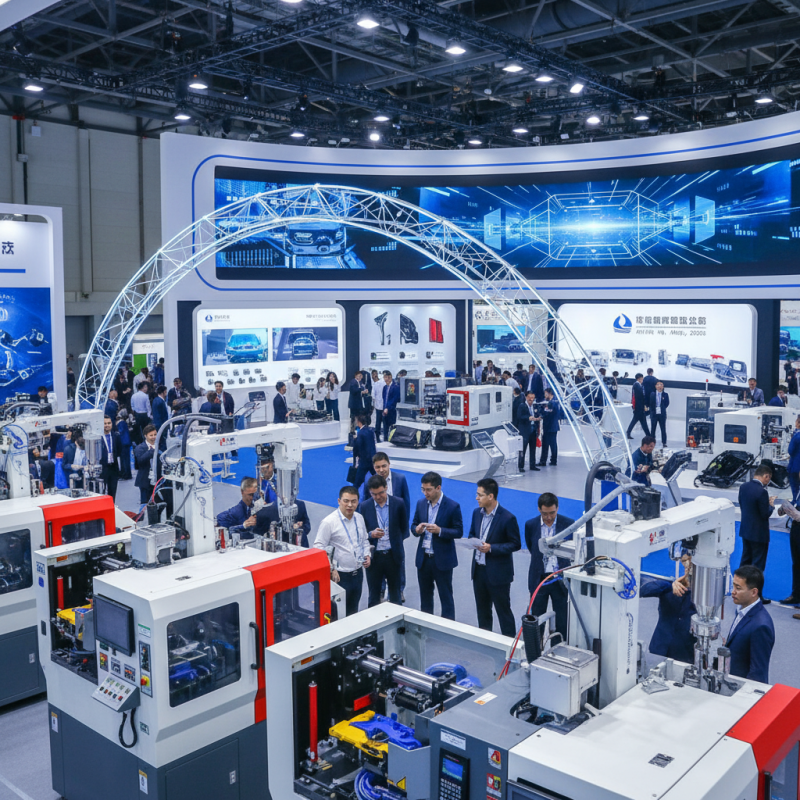
The fair, from April 15 to May 5, 2026, showcases advancements in various sectors including advanced manufacturing and electronics. Injection molding leaders will be present, offering insights into new technologies. Attendees can witness firsthand how these methods enhance production rates while maintaining quality.
However, challenges exist. The rapid evolution of materials and processes demands adaptation. Companies must continuously improve to stay competitive. Engaging with industry experts at the fair can provide critical knowledge. As we delve into the top benefits of Injection Molding, let's consider how these advancements shape the future of manufacturing.
Benefits of Injection Molding: A Cost-Effective Manufacturing Solution
Injection molding stands out as a cost-effective manufacturing solution. This technique efficiently produces parts in large quantities. The process involves injecting molten plastic into molds to create durable items. With precise control over production, companies can achieve consistent quality and shape.
One notable benefit is the reduction in waste. Traditional methods often leave behind excess material. In contrast, injection molding uses only what is needed. This efficiency can lower production costs significantly. Moreover, it allows for complex designs that would be challenging with other methods.
**Tip:** Always consider modular mold designs. They can reduce initial costs and allow for quick changes in product design.
Another advantage is the fast turnaround time. Once the mold is created, the production can start immediately. Items can be produced at a high rate, meeting demand quickly. This speed is essential for businesses looking to stay competitive.
**Tip:** Regularly evaluate your mold maintenance. Proper care can extend the life of molds and improve overall productivity.
Top 10 Benefits of Injection Molding at China Import Export Fair
High Production Efficiency: Streamlining Production at Scale
Injection molding is a powerful technique in modern manufacturing. Its high production efficiency is a key factor for many businesses. Reports suggest that companies using injection molding can achieve production rates exceeding 90% efficiency. This means less waste and more output. With the ability to create thousands of identical parts quickly, the technique suits large-scale production perfectly.
In addition to speed, injection molding reduces labor costs. Automated systems can handle tasks that used to require many workers. For instance, a facility may reduce labor expenses by up to 50% by employing automation in injection molding. This efficiency doesn't just save money; it allows for quicker turnaround times on orders. However, not all advantages come without challenges. High initial costs for machinery can deter some businesses. Yet, the long-term savings often offset these costs.
Quality control is another aspect to consider. Advanced technology allows precise control during the injection process. Fluctuations in material or temperature can lead to defects, impacting quality. Continuous monitoring can help mitigate these risks. While injection molding boasts high efficiency, ensuring consistent quality remains a challenge that demands ongoing attention.
Top 10 Benefits of Injection Molding at China Import Export Fair
| Benefit | Description | Impact |
| High Production Efficiency | Injection molding allows for high-speed production with minimal waste. | Increases output and reduces costs. |
| Design Flexibility | Complex geometries and a variety of materials can be used. | Enhances innovation in product design. |
| Cost Efficiency | Reduces production costs for large volumes. | Improves profit margins. |
| Material Variety | Compatible with a wide range of thermoplastics and thermosets. | Increases the versatility of products. |
| Reduced Labor Costs | Automation in the molding process decreases manual labor. | Lowers overhead expenses. |
| Consistent Quality | Injection molding produces uniform products with tight tolerances. | Enhances customer satisfaction. |
| Speed of Production | Cycle times can be as low as 10 seconds. | Shortens time to market. |
| Sustainability | Minimal waste generated and recyclable materials can be used. | Supports eco-friendly practices. |
| Scalability | Easily scale production volumes up or down. | Adapts to market demand. |
| Rapid Prototyping | Quickly creates prototypes for testing and evaluation. | Speeds up the product development cycle. |
Design Flexibility: Creating Complex Shapes with Precision
Injection molding is a game-changer in product design, especially for complex shapes. This technique allows for intricate geometries that other manufacturing processes simply can't achieve. According to a recent industry report, about 90% of plastic parts produced in the U.S. rely on injection molding for their design flexibility. This highlights its critical role in innovation and product development.
One striking advantage is the precision it offers. Manufacturers can create parts with tight tolerances, often within ±0.1 mm. This level of detail is essential in industries like automotive and electronics, where functionality relies heavily on precision. However, it’s important to note that not all designs are feasible. Sometimes, the complexities can lead to increased costs and longer lead times. Balancing design creativity with practical constraints can be challenging.
Moreover, the ability to produce high volumes with minimal waste is significant. Reports indicate that injection molding can reduce material waste by up to 30% compared to other methods. Yet, achieving this efficiency isn’t always straightforward. Factors like machine calibration and mold design need careful consideration. In essence, while injection molding opens up vast possibilities, navigating its complexities requires ongoing refinement and adaptation.
Material Versatility: Using Diverse Plastics for Various Applications
Injection molding offers exceptional material versatility, making it a key choice for various applications. Industry reports indicate that over 70% of plastic products utilize some form of injection molding. This process allows manufacturers to work with diverse plastics such as ABS, polypropylene, and nylon. Each material boasts specific characteristics, tailored for distinct purposes.
For instance, ABS is known for its toughness and impact resistance, often favored in consumer electronics. Meanwhile, polypropylene is lightweight and resistant to stress and chemicals. This diversity allows industries to select the best material for their needs. However, not every material performs flawlessly in injection molding, leading to challenges like warping or incorrect cooling rates. Awareness of these issues is crucial for optimizing production.
Moreover, adapting to advancements in materials science can pose a challenge. New composite materials offer exciting possibilities, but their integration requires careful consideration. A 2022 survey revealed that 60% of manufacturers struggle to keep pace with material technology trends. It highlights a gap between innovation and production capabilities. Thus, ongoing education and experimentation remain vital for harnessing the full potential of injection molding.
Sustainability Impact: Reducing Waste in the Manufacturing Process
Injection molding is a pivotal process in manufacturing. It offers significant sustainability benefits. Notably, it reduces waste in production. According to a report by the American Society for Testing and Materials, injection molding can achieve material utilization rates exceeding 90%. This efficiency helps conserve resources.
One major advantage is its ability to recycle materials. Some facilities incorporate recycled resins, further minimizing waste. Additionally, optimized designs can reduce excess materials. However, the industry still struggles with underutilized scrap. Many companies fail to recycle leftover components effectively. Improving recycling strategies can enhance sustainability efforts.
Tips: Consider using bioplastics for injection molding. They can lower environmental impact. Also, regularly audit waste management practices. Identify areas of improvement.
Sustainability in injection molding is vital. The process not only conserves resources but also aids in reducing carbon footprints. Some reports suggest that optimized molding processes can lower energy usage by 25%. However, achieving such standards requires a commitment to continuous improvement. Lack of awareness about sustainable practices remains a challenge. Addressing this gap is necessary for future advancements.