Choosing the best baking utensils made in China requires more than comparing prices or attractive packaging. China produces a wide range of kitchen tools, from stainless-steel whisks to silicone spatulas and precision measuring sets. Quality can vary between factories, even when products look identical. Reliable manufacturers usually provide clear material specifications, food-contact test reports, and consistent production records. These details matter when a spatula touches hot caramel or a rolling pin meets delicate pastry.
Practical testing reveals differences quickly. A strong whisk should keep its wires firmly attached after repeated use. A good silicone scraper should bend smoothly without leaving an odor in warm buttercream. Measuring cups should remain stable on a flat counter, not wobble during filling. I have found that small design choices often matter more than appearance. A thick handle can reduce hand fatigue, while a narrow scraper reaches the corners of a mixing bowl.
Still, no single factory or material is perfect. Some products may pass basic checks but feel awkward in daily use. Others may perform well yet provide limited information about their supply chain. Buyers should review certifications, inspect customer feedback, and test samples before placing large orders. This approach supports safer, more reliable decisions. The best baking utensils are not always the cheapest or most polished. They are the tools that combine suitable materials, careful workmanship, clear documentation, and dependable performance. That judgment deserves patience.
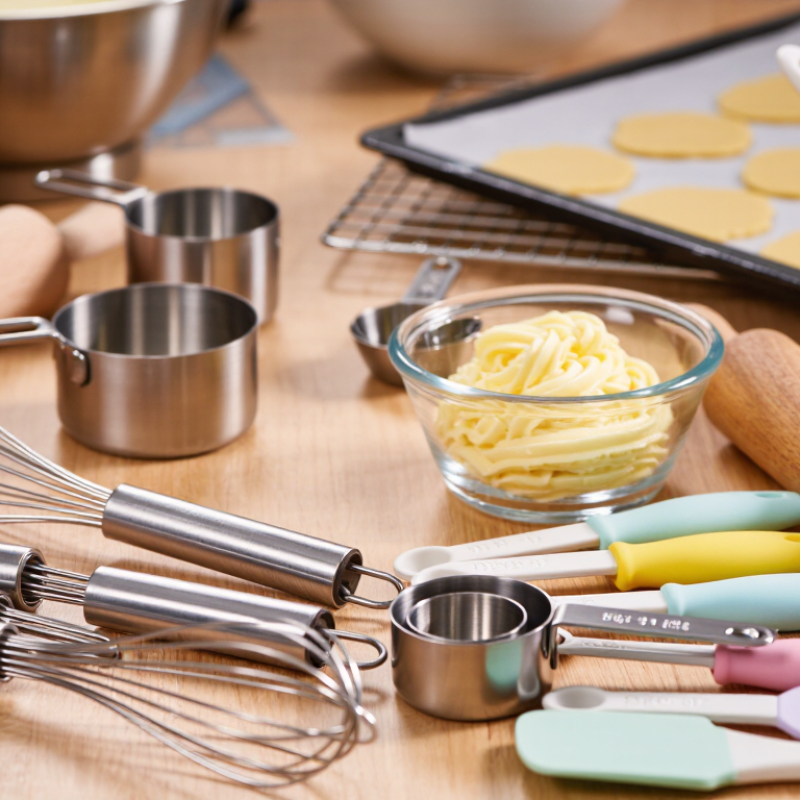
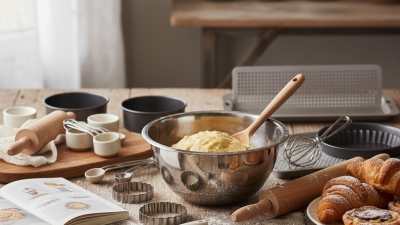
Baking utensils made in China cover a wide range of practical tools for home kitchens and professional pastry rooms. Common types include stainless steel measuring cups, silicone spatulas, balloon whisks, dough scrapers, pastry brushes, rolling pins, cooling racks, and fine-mesh sieves. Mixing bowls often come in stainless steel, glass, or food-contact plastic. Each material suits a different task.
I use a flexible silicone spatula for scraping thick batter from a bowl. Its thin edge reduces waste around the corners. A stainless steel whisk works better for cream and egg mixtures because it feels firm and resists bending. For precise recipes, measuring spoons with clear volume markings are essential. Small details matter. A poorly printed mark can cause a surprisingly large error in delicate cakes.
Quality depends on more than appearance. Check whether silicone tools state their heat resistance and whether metal surfaces feel smooth at the seams. Utensils intended for food contact should have suitable safety documentation and clear manufacturing information. Wooden rolling pins need dry storage, while plastic tools should not touch excessive heat unless rated for it. I once chose a beautiful scraper with a loose handle, and it failed during stiff dough preparation. That mistake reminded me to test the joint, grip, and cleaning method before regular use. Not every attractive utensil is practical.
Choosing the best baking utensils made in China starts with materials, not appearance. Grand View Research estimated the global bakeware market at about USD 3.5 billion in 2023. It also projects steady growth through 2030. IMARC Group reported a different 2023 estimate, near USD 4.1 billion. Their scopes differ, so these figures should not be treated as exact. Still, both reports show strong demand for reliable bakeware.
Aluminum remains popular because it heats quickly and spreads heat evenly. Thick-gauge aluminum resists warping better than thin sheet metal. Steel provides rigidity and useful scratch resistance. Stainless steel suits whisks, scrapers, and measuring tools. It does not easily retain odors. Glass gives clear visibility during baking, but sudden temperature changes can cause damage. Food-grade silicone is flexible and releases cakes easily. However, low-quality silicone may absorb odors or feel greasy after repeated use. That assumption needs testing. I would inspect certifications, wall thickness, surface finish, and temperature limits before buying.
Tips: Ask for food-contact test records, not only attractive packaging. Chinese suppliers should provide material specifications and batch information. Check compliance with GB 4806 requirements, or comparable FDA and EU standards. Press silicone lightly; it should recover without a strong chemical smell. For metal pans, examine rolled edges and coating adhesion. Small details matter.
Aluminum is widely used for baking trays because it transfers heat quickly and evenly. Carbon steel provides strong heat conduction and durability, while stainless steel offers corrosion resistance with lower thermal conductivity. Borosilicate glass and food-grade silicone are valued for chemical stability, transparency, and flexibility rather than fast heat transfer.
Representative thermal conductivity values at approximately room temperature; actual performance varies by alloy, thickness, coating, and product design.
Best Chinese Baking Utensils for Different Tasks
Chinese-made baking utensils now cover nearly every stage, from weighing flour to decorating cakes. According to Fortune Business Insights’ 2024 kitchen utensils report, the global market reached about USD 29 billion in 2023. This growth reflects stronger demand for practical, affordable tools. For measuring, choose stainless-steel spoons and a digital scale with 0.1-gram accuracy. Measure twice.
For mixing, a deep stainless-steel bowl prevents flour from escaping, while a flexible silicone spatula reaches the corners. A wire whisk works well for eggs, cream, and light batters. For dough, a wooden or food-grade silicone rolling pin gives better control than a heavy metal one. A pastry scraper is useful for dividing dough and cleaning the work surface. Small details matter. A stable handle can reduce wrist fatigue during repeated use.
For baking, select thick aluminum trays with even edges, and check the stated temperature range before using silicone molds. Food-contact certification, clear material labeling, and smooth surfaces deserve more attention than appearance. The China Household Electrical Appliances Association reported continued growth in domestic kitchen-product manufacturing through 2023, but production quality still varies between factories. I have found inexpensive tools that perform surprisingly well, yet some measuring spoons lose their markings after repeated washing. That weakness is easy to overlook. Inspect seams, coatings, and handles before purchase, especially for tools used near high heat.
| Utensil | Best Baking Task | Common Material | Useful Size or Capacity | Heat or Temperature Guidance | Key Advantages | Care and Safety Notes |
|---|---|---|---|---|---|---|
| Silicone Spatula | Scraping bowls, folding batter, mixing melted chocolate | Food-grade silicone with a reinforced nylon or stainless-steel core | 20–30 cm length; flexible head around 5–7 cm wide | Many food-grade silicone heads tolerate approximately −40°C to 230°C; check the product specification | Flexible edge reaches bowl corners; nonstick-friendly; useful for minimizing food waste | Do not expose the handle or core to heat unless it is specifically heat resistant; inspect for cracking or separation |
| Balloon Whisk | Whipping cream, incorporating air into eggs, mixing light batters | Stainless steel wire and handle | 25–30 cm length; 8–12 wire loops | Suitable for normal mixing temperatures; avoid leaving it in hot cookware unless the handle is heat resistant | Creates air efficiently and reaches a large volume of mixture | Use a silicone-coated whisk with nonstick cookware; dry thoroughly to reduce corrosion around joints |
| Digital Kitchen Scale | Accurate measurement of flour, sugar, butter, and liquids by weight | Tempered glass, stainless steel, or coated plastic platform | Typical capacity: 5 kg; resolution commonly 1 g | Use at room temperature and keep the electronic housing away from steam and direct heat | Improves consistency, especially for bread and pastry recipes | Place on a stable surface; allow the display to return to zero after adding a container; wipe rather than immerse |
| Rolling Pin | Rolling pie dough, cookie dough, puff pastry, and fondant | Beech wood, stainless steel, marble, or food-grade silicone | 30–45 cm barrel length; 5–8 cm diameter | Use chilled materials for pastry; avoid sudden temperature changes with marble | Provides even pressure and helps control dough thickness | Hand-wash wooden versions and dry immediately; lightly flour or chill the pin when dough becomes sticky |
| Bench Scraper | Dividing bread dough, lifting pastry, and cleaning a work surface | Stainless steel blade with plastic, wood, or silicone handle | Blade commonly 12–16 cm wide | Designed for room-temperature preparation; not a utensil for direct oven use | Cleanly cuts dough and gathers ingredients without damaging most worktops | Use the rounded or blunt edge for dough; store the blade safely and avoid cutting directly on delicate surfaces |
| Pastry Brush | Applying egg wash, butter, oil, syrup, and glaze | Food-grade silicone or natural/nylon bristles with a plastic or stainless-steel handle | Brush width commonly 2.5–5 cm | Silicone versions often tolerate high temperatures, commonly up to about 230°C; verify the stated limit | Silicone bristles are easy to clean and are less likely to shed than some loose natural bristles | Wash thoroughly after using raw egg; check that bristles and handle remain firmly attached |
| Fine-Mesh Sieve | Sifting flour and cocoa, removing lumps, and dusting powdered sugar | Stainless steel mesh with a stainless steel or plastic frame | 15–20 cm diameter; mesh openings commonly about 0.5–1 mm | Stainless steel models can handle warm ingredients, but are not intended for direct flame | Improves dry-ingredient distribution and produces smoother sauces or creams | Rinse promptly after use; brush flour from the mesh and dry completely to prevent trapped moisture |
| Cookie Scoop | Portioning cookies, truffles, muffins, and small portions of dough | Stainless steel bowl with a spring-operated release mechanism | Common capacities: 15 ml, 30 ml, or 45 ml | Use for portioning before baking; do not place the scoop in the oven | Produces more uniform portions, which promotes even baking | Hand-wash if dough residue affects the spring; avoid forcing very hard or frozen dough through the mechanism |
| Pastry Cutter | Cutting cold butter into flour for pie crusts, biscuits, and scones | Stainless steel blades with a stainless steel or coated handle | Typically 5 curved blades; handle length around 12–15 cm | Use with chilled ingredients; not designed for oven exposure | Distributes butter efficiently while helping keep the mixture relatively cool | Clean between the blades carefully; stop when pea-sized butter pieces remain for a flaky texture |
| Cooling Rack | Cooling cookies, cakes, bread, and pastries after baking | Chrome-plated or uncoated stainless steel wire | Commonly 25 × 40 cm; grid spacing around 1–2 cm | Many metal racks tolerate normal baking temperatures, but verify whether the rack is oven-safe before use | Allows air circulation underneath baked goods and reduces soggy bottoms | Place on a heat-resistant surface; remove baked goods with care if the rack has a very fine or sharp grid |
| Oven Thermometer | Checking actual oven temperature and identifying hot or cool areas | Stainless steel housing with a heat-resistant glass or analog display | Compact standing or hanging design; commonly displays 50–300°C | Choose a model whose stated range exceeds the intended baking temperature | Helps compensate for inaccurate oven thermostats and improves repeatability | Position near the center of the oven without touching the heating element or oven wall |
| Silicone Baking Mat | Baking cookies, macarons, and roasted pastry items on sheet pans | Food-grade silicone reinforced with fiberglass mesh | Common half-sheet size: approximately 42 × 29 cm | Many products are rated to approximately 230°C; follow the stated maximum temperature | Provides a reusable nonstick surface and reduces the need for parchment paper | Use on a flat baking sheet; avoid sharp knives, open flames, and cutting directly on the mat |
| Piping Bag and Tips | Decorating cakes, filling pastries, and piping choux or meringue | Disposable polyethylene or reusable silicone bag with stainless steel tips | Bag sizes commonly 30–40 cm; round tips for lines and star tips for rosettes | Use at preparation temperature; do not expose the bag to oven heat unless explicitly rated for it | Offers precise control over shape, volume, and decoration patterns | Wash reusable bags and metal tips thoroughly; use a coupler when changing tips frequently |
| Pastry Wheel | Cutting lattice strips, ravioli-style pastry, and decorative dough edges | Stainless steel wheel with a plastic or stainless-steel handle | Wheel diameter commonly 4–6 cm | Use on cool or room-temperature dough; not intended for direct heat | Creates straight, fluted, or decorative cuts with consistent width | Keep fingers clear of the wheel; use a protected storage location and wash immediately after use |
Baking utensils made in China can offer excellent value, but quality varies between factories and production runs. When evaluating them, I inspect the material, construction, safety documentation, and long-term performance rather than relying on appearance.
Quality inspection focus: Material, construction, safety documentation, and long-term performance are more reliable indicators than appearance alone.
For stainless-steel whisks, spatulas, and measuring spoons, check for food-grade steel, smooth welds, and clean edges. The handle should feel balanced and stay firm after repeated washing.
A bright finish can mislead me. I also look for clear information about food-contact testing and traceability. Reliable suppliers should provide current documentation for relevant safety requirements, including material composition and temperature limits.
Missing paperwork does not automatically prove danger, but it deserves careful questioning.
Silicone tools need special attention. Press a spatula against a hard surface and inspect the seam for gaps, oiliness, or a strong chemical smell. Check whether the stated heat range suits ovens, pans, and dishwashers.
Cheap silicone may become sticky or crack after repeated heating. I test flexibility after cooling, too. Durability often appears in small details, such as reinforced corners and securely molded handles.
For wooden utensils, examine moisture content, sanding, and coating safety. I once underestimated a slightly rough edge; it collected food residue quickly. That mistake changed my inspection routine.
Practical sample test: Wash each tool repeatedly, expose it to normal baking heat, and watch for warping, fading, rust, or loose parts.
Quality Chinese-made baking utensils can serve for years when material, finish, and maintenance match the task. Stainless steel tools resist stains and odors. Silicone spatulas tolerate heat well, but users should check the stated temperature limit. Aluminum pans heat quickly and may discolor after acidic recipes. That change is not always dangerous, though it deserves inspection.
Replace any utensil with peeling coating, deep scratches, cracks, or loose handles. I once ignored a small silicone split; flour eventually collected inside it.
Care begins with cleaning. The FDA Food Code 2022 recommends washing, rinsing, sanitizing, and air-drying food-contact surfaces.
At home, remove batter before it hardens. Use warm water and mild detergent, then dry metal tools immediately. This reduces moisture-related corrosion. Avoid steel wool on coated pans. It can create damage that is difficult to see. Follow the maker’s dishwasher guidance, especially for wood, nonstick surfaces, and silicone with glued joints.
Storage matters too. Keep dry utensils away from sharp edges and heavy cookware. Do not stack warm pans, because sudden temperature changes can warp thinner metal.
The USDA FSIS places bacterial growth between 40°F and 140°F and advises discarding perishables left over two hours.
Clean tools before preparing another batch, particularly after contact with eggs or dairy. These habits are simple, but I still forget the drying step sometimes. That small mistake can shorten a utensil’s useful life.