How to Choose the Best Industrial Baking Equipment for Your Needs?
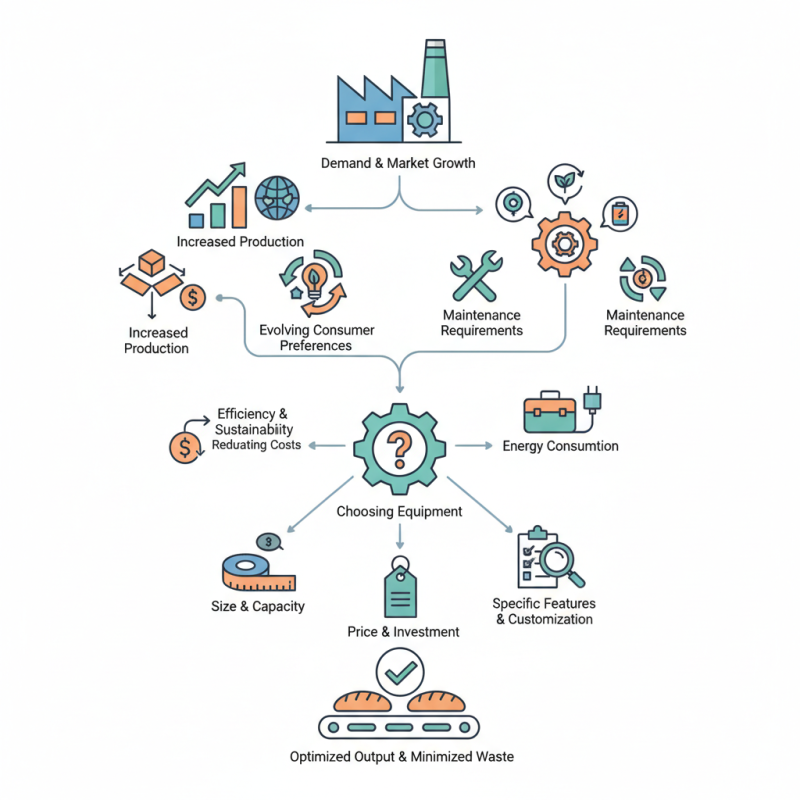
When choosing industrial baking equipment, understanding the demand is crucial. The global industrial baking equipment market is expected to grow at a compound annual growth rate (CAGR) of about 5.6% by 2027, according to a recent market report. This growth reflects increased production needs and evolving consumer preferences.
Selecting the right equipment is not just about size or price. Many factors come into play, including efficiency, maintenance requirements, and energy consumption. For instance, energy-efficient ovens can reduce operating costs and help meet sustainability goals. Neglecting these factors may lead to poor investment decisions.
Choosing industrial baking equipment requires careful consideration of individual needs. Companies often underestimate the importance of specific features. An ill-fitting machine can mean wasted time and resources. Understanding the unique requirements of your production line is essential for success. The right equipment should facilitate better output while minimizing waste.
Understanding the Types of Industrial Baking Equipment Available
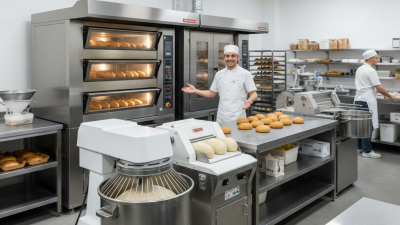
When selecting industrial baking equipment, it's important to understand the various types available. Ovens, mixers, and proofers play vital roles in the baking process. Each type serves a specific purpose, impacting the final product's quality.
Ovens come in various styles, such as convection and deck ovens. Convection ovens use fans to circulate heat, providing even baking. Deck ovens, on the other hand, offer intense heat from below, ideal for artisan breads. When deciding, consider the volume of goods you produce daily.
Mixers are essential for dough preparation. Planetary mixers and spiral mixers cater to different needs. Planetary mixers are versatile for smaller batches, while spiral mixers handle large volumes efficiently. Tips: Assess your production capacity. This will help you choose the right mixer.
Proofers ensure the dough rises properly. They maintain controlled humidity and temperature. Choose a proofer that fits your workspace. Sometimes, equipment needs adjustments or maintenance. Listen to your staff for feedback to improve efficiency. Remember, the right choice can enhance not just output, but quality as well.
Assessing Your Production Needs and Volume Requirements
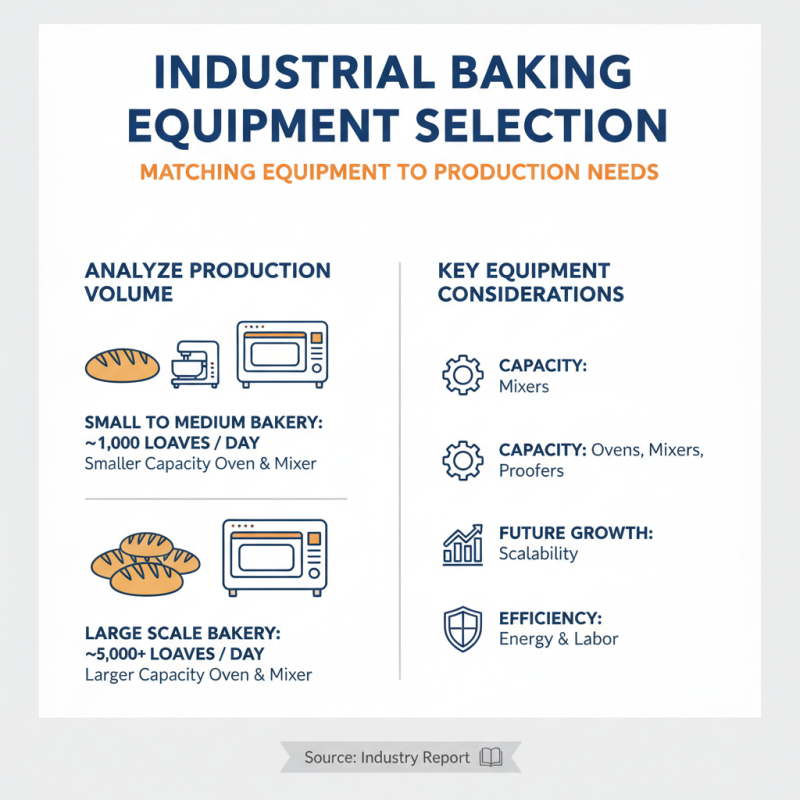
When selecting industrial baking equipment, understanding your production needs is crucial. Start by analyzing your current and future volume requirements. According to a recent industry report, a bakery producing 1,000 loaves daily may need different equipment compared to one producing 5,000. The capacity of ovens and mixers will vary significantly.
Consider the specifics of your baking process. Equipment durability, energy efficiency, and maintenance costs are vital. For instance, a high-capacity oven might seem ideal for increasing output, but it can lead to higher energy costs. Reflecting on the balance between capacity and energy efficiency can lead to better long-term savings.
It's essential to factor in flexibility for future growth. The baking industry is evolving, with consumer demands shifting towards artisanal products. Investing in equipment that can adapt to various recipes or batch sizes might cost more upfront but can pay off in meeting market trends. Remember, equipment that seems perfect now may not suit future needs. Always think ahead.
Evaluating Equipment Features for Efficiency and Consistency
When selecting industrial baking equipment, efficiency and consistency are paramount. Look closely at features that enhance performance. Temperature control is crucial. Precise heating ensures even baking, reducing the risk of burnt edges or undercooked centers. A good oven should provide uniform heat distribution. Some models struggle with this, leading to inconsistent results.
Another important factor is adjustability. Equipment should adapt to various recipes and batch sizes. If a mixer can only handle one type of dough, it limits your versatility. Investing in a machine that offers different speed settings is wise. Think of how frustrating it can be when a single function restricts your creativity.
Maintenance features also matter. Equipment should allow for easy cleaning and repairs. Machines with hard-to-reach parts can lead to hygiene issues. A baking setup should always be user-friendly. Consider how equipment placement affects workflow. A well-organized kitchen promotes efficiency. Remember, the right equipment can greatly influence the success of your baking operation.
Considering Budget Constraints and Total Cost of Ownership
When choosing industrial baking equipment, budget constraints are crucial. According to industry reports, about 64% of businesses struggle with limited budgets while assessing equipment options. Understanding total cost of ownership (TCO) helps in making informed decisions. TCO includes not just the initial purchase price but also maintenance, energy consumption, and potential downtime costs.
Consider energy efficiency as a primary factor. Data shows that energy-efficient machines can reduce operational costs by up to 30%. While the initial investment might be higher, the savings over time can be significant. Moreover, factoring in maintenance costs is essential. A machine that appears cheaper might incur higher maintenance fees, which can accumulate quickly. Research indicates that maintenance costs can exceed 15% of the total equipment price annually.
Equipment lifespan is another aspect to reflect on. While some machines may offer lower upfront costs, their longevity is often questionable. A study found that 40% of businesses replace their baking equipment within five years due to performance issues. Investing in higher-quality equipment could lead to better reliability and longer service life, ultimately saving money in the long run. Balancing these factors against your budget is challenging but necessary for sustainable success in bakery operations.
Researching Reliable Brands and Supplier Support Options
When considering industrial baking equipment, supplier support is crucial. A comprehensive report indicates that 75% of businesses prioritize reliable service in their purchasing decisions. This support can include installation, maintenance, and troubleshooting services. Companies that lack effective supplier support often face productivity losses. In many cases, the downtime from equipment failures can cost manufacturers thousands of dollars per hour.
Researching reputable brands is equally important. Studies show that bakeries with well-established suppliers tend to report higher satisfaction rates. A strong record of customer service can minimize risks associated with equipment failures. It is essential to assess suppliers’ response times. A slow response can hinder production schedules, impacting overall efficiency.
Not all suppliers are created equal. Small businesses may offer lower prices but often lack extensive support. Engaging with potential suppliers helps identify those who align with your needs. Consider their customer reviews, response to inquiries, and available resources. A thoughtful approach to supplier selection can prevent future frustrations.