Top Bakery Automation Equipment to Enhance Your Baking Efficiency?
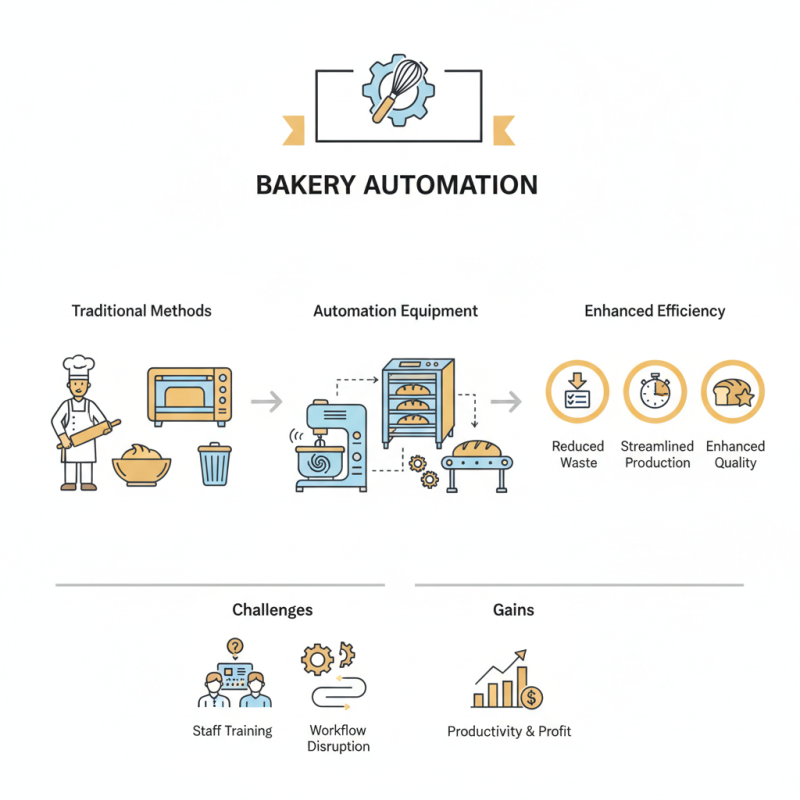
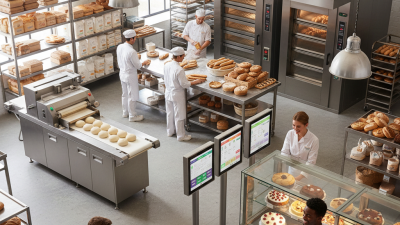
In the fast-paced world of baking, efficiency is key. Bakery automation equipment serves as a game-changer, transforming traditional methods. With the right tools, bakeries can streamline production, reduce waste, and enhance quality.
Today's baking demands high precision and consistency. Automation equipment can help meet these needs by providing reliable performance. Machines like mixers, proofers, and ovens can work tirelessly, but they are not perfect. Technology still requires skilled operators to manage potential issues.
Investing in bakery automation equipment is essential, but it's crucial to reflect on implementation challenges. Training staff is one aspect that must be prioritized. The introduction of new machines can disrupt workflows initially. However, overcoming these hurdles can lead to significant gains in productivity and profit.
Essential Features of Bakery Automation Equipment for Efficient Production
In the world of baking, automation has become essential for enhancing production efficiency. Bakery automation equipment offers various features that streamline processes. For example, mixing machines can blend ingredients consistently, reducing human error. Instead of relying solely on manual labor, these machines ensure uniformity in dough texture.
Another crucial feature is programmable controls. This allows bakers to customize mixing times and temperatures. When settings are adjusted correctly, each batch can maintain the same quality. Such consistency is vital for building a loyal customer base. However, bakers must understand how to calibrate these machines properly. Misconfigurations can lead to undesirable results.
Conveyor systems also enhance workflow. They transport products seamlessly from one stage to another. This minimizes manual handling, which can result in contamination. But it can be tricky to balance speed and quality. If products move too quickly, they may not receive the necessary attention. Thus, reflecting on equipment choices is essential for achieving the right production balance.
Types of Bakery Automation Equipment: An Overview of Key Solutions
Bakery automation equipment is crucial in modern baking. With increased competition, bakers must enhance efficiency. The market for bakery automation is projected to grow at a CAGR of 5.3% from 2021 to 2026. Various equipment types play a pivotal role in driving that growth.
Mixers, ovens, and proofing equipment are essential. High-capacity mixers can reduce mixing time, ensuring consistent dough quality. Automated ovens improve baking precision. They often save energy, as temperature control is more efficient. Proofing cabinets help maintain optimal conditions for dough fermentation. These solutions can cut labor costs significantly, up to 30%, according to industry reports.
Tips: Regular maintenance of equipment is crucial. Neglecting this can lead to breakdowns, ultimately affecting production. Also, consider the training of staff on new systems. An untrained team may not use automation effectively, negating potential efficiency gains.
Importantly, not every solution fits all bakeries. Small operations might struggle with large-scale mixers. Customization and flexibility are necessary. Bakeries should evaluate their needs carefully; a one-size-fits-all approach can waste resources.
Benefits of Integrating Automation into Your Baking Processes
Integrating automation into baking processes can significantly improve efficiency. Automated mixers, for instance, ensure uniform dough consistency. This reduces human error and saves time. With automatic ovens, bakers can set precise temperatures and timings. The result? Even baking and consistent product quality.
Another advantage is labor savings. Fewer workers are needed for repetitive tasks. Yet, this raises concerns about job displacement. Finding the right balance between automation and human skill is essential. Additionally, investing in new technology can be costly upfront. It's crucial to assess whether the long-term benefits outweigh these initial expenses.
Moreover, automation can handle bulk production efficiently. Imagine producing hundreds of loaves per hour with minimal effort. However, some bakers might miss the artistry of manual baking. The personal touch can be lost in automation. Reflecting on these changes is key to deciding how much technology to embrace.
Factors to Consider When Choosing Bakery Automation Equipment
When considering bakery automation equipment, several factors are vital for enhancing your baking efficiency. The first aspect is your production volume. Higher volume requires more robust machinery. Small bakeries may benefit from compact machines, which take up less space. Larger operations need heavy-duty equipment that can handle continuous use.
Another crucial factor is the type of baked goods you produce. Different products require different machines. For instance, bread-making machinery differs significantly from pastry equipment. It's important to ensure that the equipment you choose aligns with your specialty.
Tips: Evaluate your current workflow. Identify bottlenecks and areas for improvement. This will help narrow down necessary equipment. Consider ease of maintenance as well. Complicated machines may slow down your process when repairs are needed. Additionally, think about the training required for your staff. A complex machine may lead to confusion and inefficiencies. Balancing efficiency with usability is key to a successful operation.
Top Bakery Automation Equipment to Enhance Your Baking Efficiency
| Equipment Type |
Key Features |
Benefits |
Considerations |
| Dough Mixer |
Variable speed settings, stainless steel bowl |
Consistent dough quality, time-saving |
Size of bowl, power requirements |
| Proofing Cabinet |
Controlled humidity and temperature |
Improved fermentation, better flavor |
Capacity, ease of cleaning |
| Oven |
Convection heat, programmable settings |
Even baking, energy efficiency |
Size, energy source |
| Slicer |
Adjustable slice thickness, safety features |
Uniform slices, reduced labor |
Ease of operation, maintenance |
| Cooling Rack |
Stackable design, built-in heat dissipation |
Faster cooling times, space-efficient |
Material, stability |
Future Trends in Bakery Automation Technology to Watch
The landscape of bakery automation is evolving quickly. Innovations are driving efficiency and changing how we bake. Concentrating on data analytics is crucial. It allows bakers to monitor production in real time. Adjusting recipes on-the-fly helps minimize waste.
Robotics are also gaining traction. They handle repetitive tasks, freeing up workers for essential roles. However, many bakeries hesitate to adopt this technology. The initial investment can be daunting. Workers may fear job displacement. Balancing technology and human input is key.
Alongside these trends is the rise of artificial intelligence. AI can predict demand and streamline inventory management. Yet, understanding the technology is vital for success. Training staff may take time. Embracing change is challenging but necessary for growth.